
Nomorobo’s “Behind the Scams” Campaign Wins a 2026 Telly Award
May 20, 2026
Nomorobo on Philadelphia News: Government Shutdown Scams Target SNAP, Medicare, and Health Benefits
June 2, 2026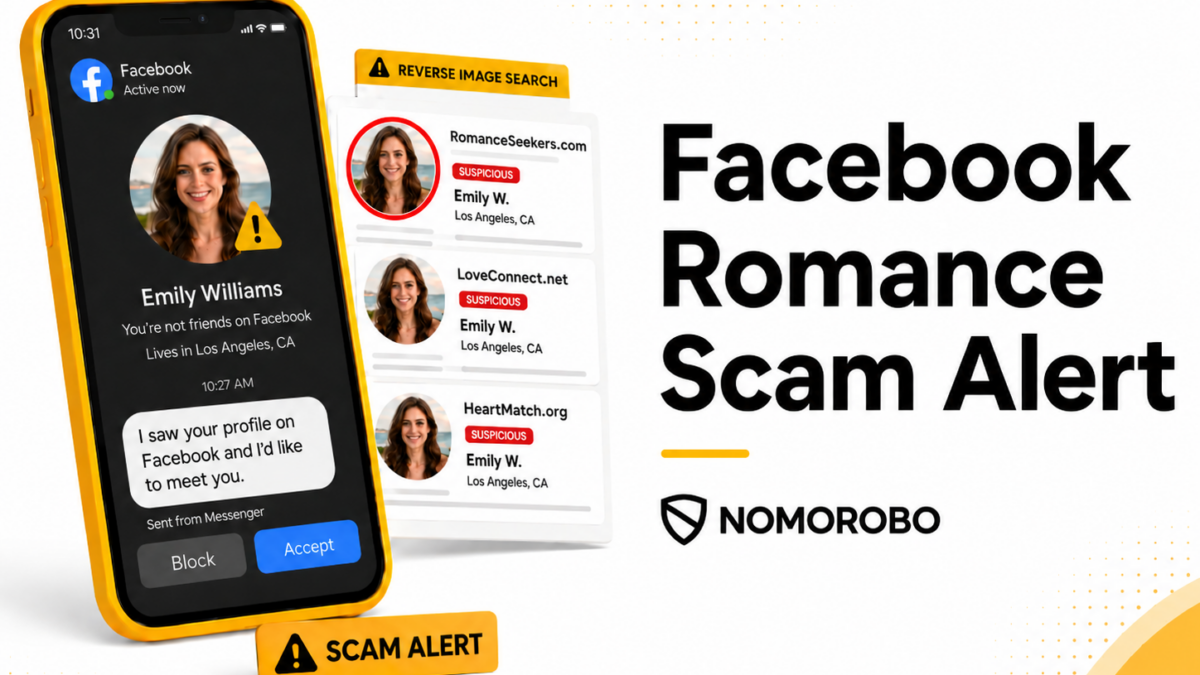
Facebook Romance Scam Alert: The Fake Profile That Starts With a Compliment
“I saw your profile on Facebook and I’d like to meet you.”
It sounds harmless. Maybe even flattering. But that simple message can be the opening line of a romance scam designed to get your attention, earn your trust, and eventually separate you from your money or personal information.
In this Behind the Scams example, the target does one very smart thing before getting pulled in: they run a reverse image search. The result? The “beautiful woman” in the profile photo appears on a suspicious number of websites using the same kind of message.
That is not romance. That is a red flag wearing perfume.
Watch the Behind the Scams Example
We’ve put together an in-depth video breaking down this exact scam so you can hear it, see how it works, and know how to respond.
In the short video, the scam begins with a friendly Facebook message from someone the target does not know:
“I saw your profile on Facebook and I’d like to meet you.”
The target is curious at first. But before agreeing to anything, they check the image. When the same photo appears in suspicious places online, the conversation ends immediately.
That quick pause is exactly what scammers do not want.
How Facebook Romance Scams Work
Romance scams often begin on social media, dating apps, or even through unexpected text messages. The scammer creates a fake identity using stolen photos, attractive profile details, and a message that feels personal enough to spark curiosity.
The goal is not always to ask for money right away. First, they want to build trust.
A typical scam may follow this pattern:
- A stranger sends a friendly or flirty message
- Their profile photo looks polished, attractive, or too perfect
- They quickly show strong interest
- They ask to move the conversation to text, WhatsApp, Telegram, or another app
- They avoid meeting in person or making a normal video call
- Eventually, they ask for money, gift cards, cryptocurrency, banking help, or personal information
According to the FTC, romance scammers commonly build fake relationships and then invent urgent reasons for money. They may claim they need help with travel, medical bills, business trouble, family emergencies, or investment opportunities.
FTC data also shows that social media is a major starting point for scams. In 2025, people reported losing $2.1 billion to scams that began on social media, and nearly 60% of people who reported losing money to a romance scam said it started on a social platform.
Why Reverse Image Search Matters
A reverse image search lets you check whether a profile photo appears somewhere else online.
That matters because romance scammers often steal photos from:
- Real people’s public social media accounts
- Influencer profiles
- Modeling pages
- Old dating profiles
- Stock image sites
- Other scam profiles
If the same image appears with different names, different locations, or suspiciously similar messages, stop communicating.
A reverse image search is not perfect. Scammers can now use AI-generated images or lightly edited photos that are harder to trace. But it is still a smart first step, especially when someone you do not know contacts you out of the blue.
Red Flags in This Scam
The message in this example is short, but it contains several warning signs.
1. The contact is unexpected
You did not message them first. You do not know them. They suddenly appear with personal interest.
That does not automatically make someone a scammer, but it does mean you should slow down.
2. The message is vague
“I saw your profile” sounds personal, but it could be sent to thousands of people. Scammers often use copy and paste lines because they are playing a numbers game.
3. The profile photo does not check out
In the video, the target searches the image and finds it appearing across suspicious websites. That is a strong sign that the person is not who they claim to be.
4. The scam starts with emotion, not details
Romance scammers use attention, compliments, and curiosity to lower your guard. The first message is bait. The real scam comes later.
What To Do If a Stranger Messages You Romantically
If you receive a suspicious message on Facebook, Instagram, a dating app, or by text:
- Do not send money, gift cards, cryptocurrency, or banking information
- Do not share private photos or personal details
- Run a reverse image search on the profile photo
- Search the person’s name, photos, and common phrases from their message
- Ask someone you trust for a second opinion
- Block the account if anything feels off
- Report the profile to the platform
- Report fraud attempts to the FTC at ReportFraud.ftc.gov
And remember the FTC’s best rule: never send money or gifts to a sweetheart you have not met in person.
What If You Already Responded?
Do not panic. Replying once does not mean you are trapped.
Here is what to do next:
- Stop the conversation immediately
- Do not click any links they sent
- Do not send money or personal information
- Screenshot the messages in case you need to report them
- Block the sender
- Report the account to the social media platform
- If you shared financial information, contact your bank or credit card company right away
- If you shared sensitive personal information, consider using privacy and identity protection tools
Nomorobo’s Personal Information Protection tools can help you find where your personal data is exposed online and take steps to remove it from people search sites and data broker pages.
Fraud Fighter Pro Tip
Use reverse image search before trusting a stranger’s profile photo.
Reverse image search lets you search the internet using an image instead of text. If the same photo shows up in multiple places online, especially on suspicious websites or under different names, that’s a warning sign the profile may be fake.
In this scam, that one quick search exposed the problem before the conversation went any further.
Scammers constantly change their scripts, photos, and platforms. That is why Nomorobo created Fraud Fighters: a resource for seeing and hearing real scam examples so you can recognize the tactics before they work.
Stop Scam Calls and Spam Texts Before They Reach You
Romance scams may start with a message, a call, or a fake profile, but the goal is usually the same: steal your trust, your information, or your money.
Nomorobo helps stop scammers, spammers, and swindlers before they get a chance to start the conversation.
Sign up today and keep your phone and your personal information protected.