2025 Phone Scam Report
In 2025, Nomorobo blocked 107 million unwanted robocalls and text messages, including millions of scam attempts designed to steal money, personal information, and peace of mind.
This report breaks down the biggest phone scam trends of the year, from tax debt robocalls and fake Amazon alerts to scam texts, AI-assisted targeting, and the rise of local-looking spoofed numbers.
What the 2025 data revealed
Scam texts are becoming the new front line
Scammers are not giving up on robocalls. They are adding another weapon: text messages.
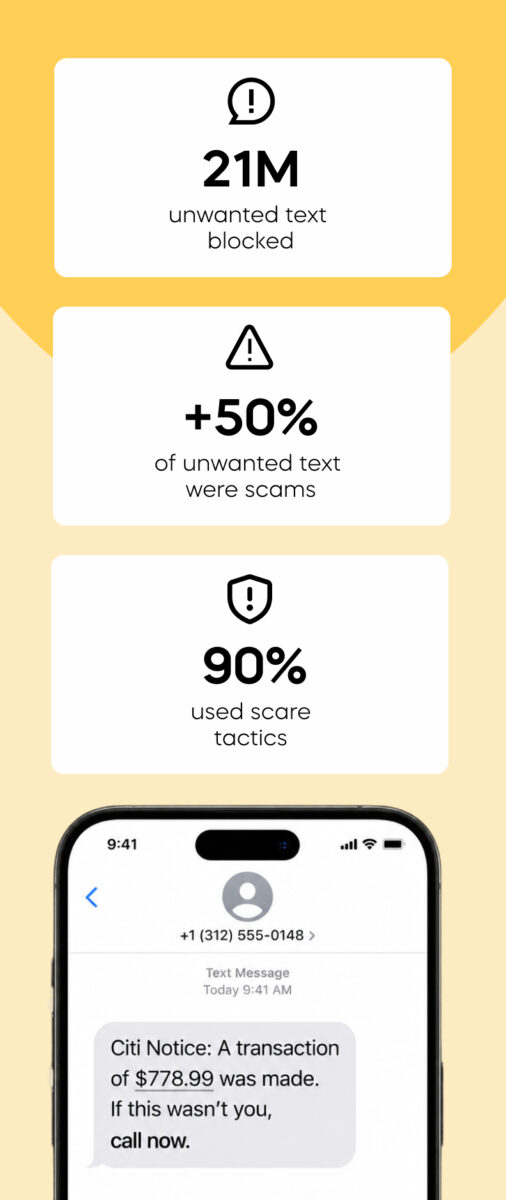
In 2025, Nomorobo blocked nearly 21 million unwanted text messages. More than half of unwanted texts analyzed were scams, and 90% of those scam texts used scare tactics to pressure people into responding quickly.
These messages are designed to create a mini panic moment. A fake charge. A suspicious login. A delivery problem. A bank alert. The goal is simple: get you to tap, call, or reply before you have time to think.
Common scam text tactics
- Fake bank or credit card charges
- “Unauthorized” Apple Pay or online purchase alerts
- Suspicious login warnings
- Package delivery problems
- Crypto account alerts
- Urgent “call now” instructions
What to do
Do not tap links or call numbers from unexpected texts. Open the company’s official app or website directly, or call the verified number on your card, bill, or account.
“Local” numbers are getting harder to trust - again
A call from your area code used to feel familiar. Now, it is often part of the trick.
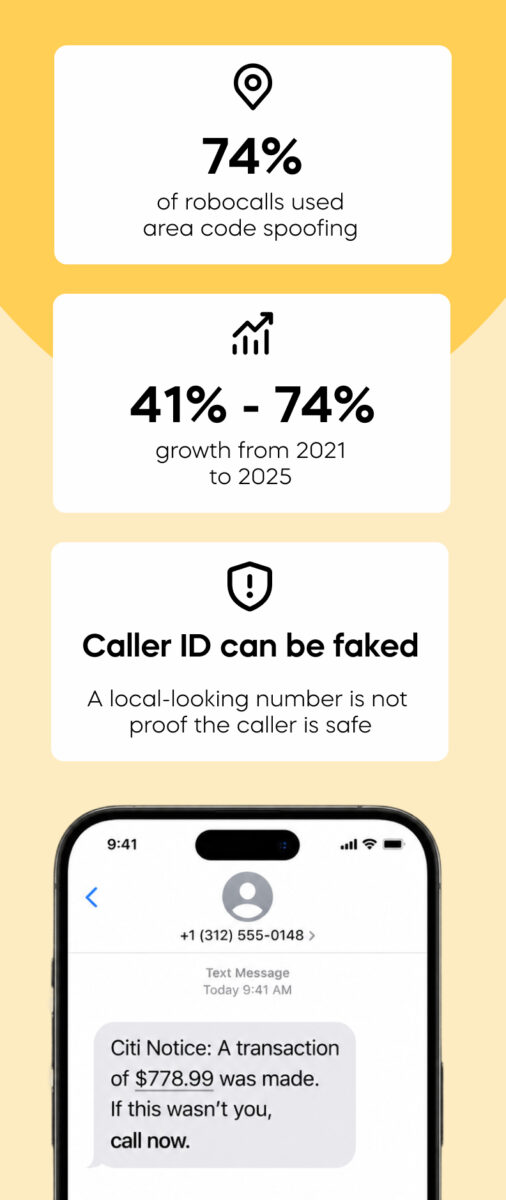
In 2025, 74% of robocalls used area code spoofing, meaning the caller ID was manipulated to match the recipient’s area code. Scammers use this tactic because people are more likely to answer a number that looks nearby or familiar.
Area code spoofing has grown sharply over time. In 2021, about 41% of robocalls used this tactic. By 2025, that number had climbed to 74%.
Why it works
- Creates instant familiarity
- Looks local or nearby
- Feels safer than an unknown number
- Makes people more likely to answer
- Hides where the call is really coming from
What to do
Let unknown numbers go to voicemail. If the call claims to be from a bank, delivery company, government agency, or familiar business, do not rely on caller ID. Hang up and contact the organization directly using its official number.
60+ remain a top target
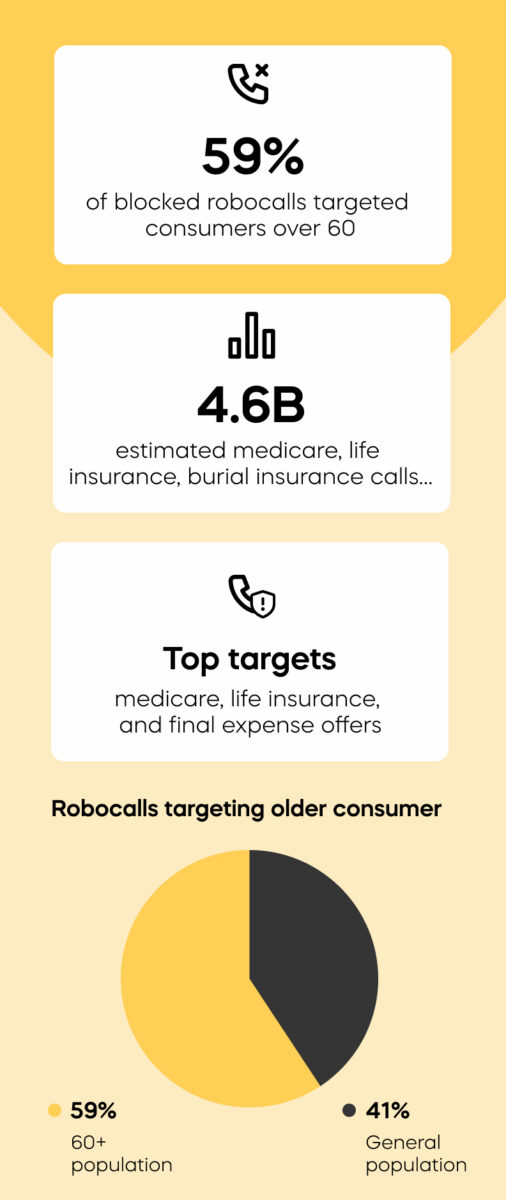
The highest volume robocalls in 2025 targeted older Americans, especially calls related to medicare, life insurance, and burial insurance.
Together, those categories placed an estimated 4.6 billion calls across the U.S. in 2025. Nomorobo’s analysis also found that close to 60% of robocalls blocked in 2025 were targeted specifically at consumers over age 60.
These calls can be especially effective because they focus on real concerns: health coverage, benefits, final expenses, family finances, and urgent enrollment windows.
Common call themes
- Medicare plan offers
- Supplemental health benefits
- Life insurance
- Burial or final expense insurance
- Fake benefit updates
- Government or agency impersonation
What to do
Be cautious with any unexpected call about benefits, insurance, or government programs. Do not share your Medicare number, Social Security number, payment details, or one-time passcodes on an inbound call.
More phone scam trends from 2025
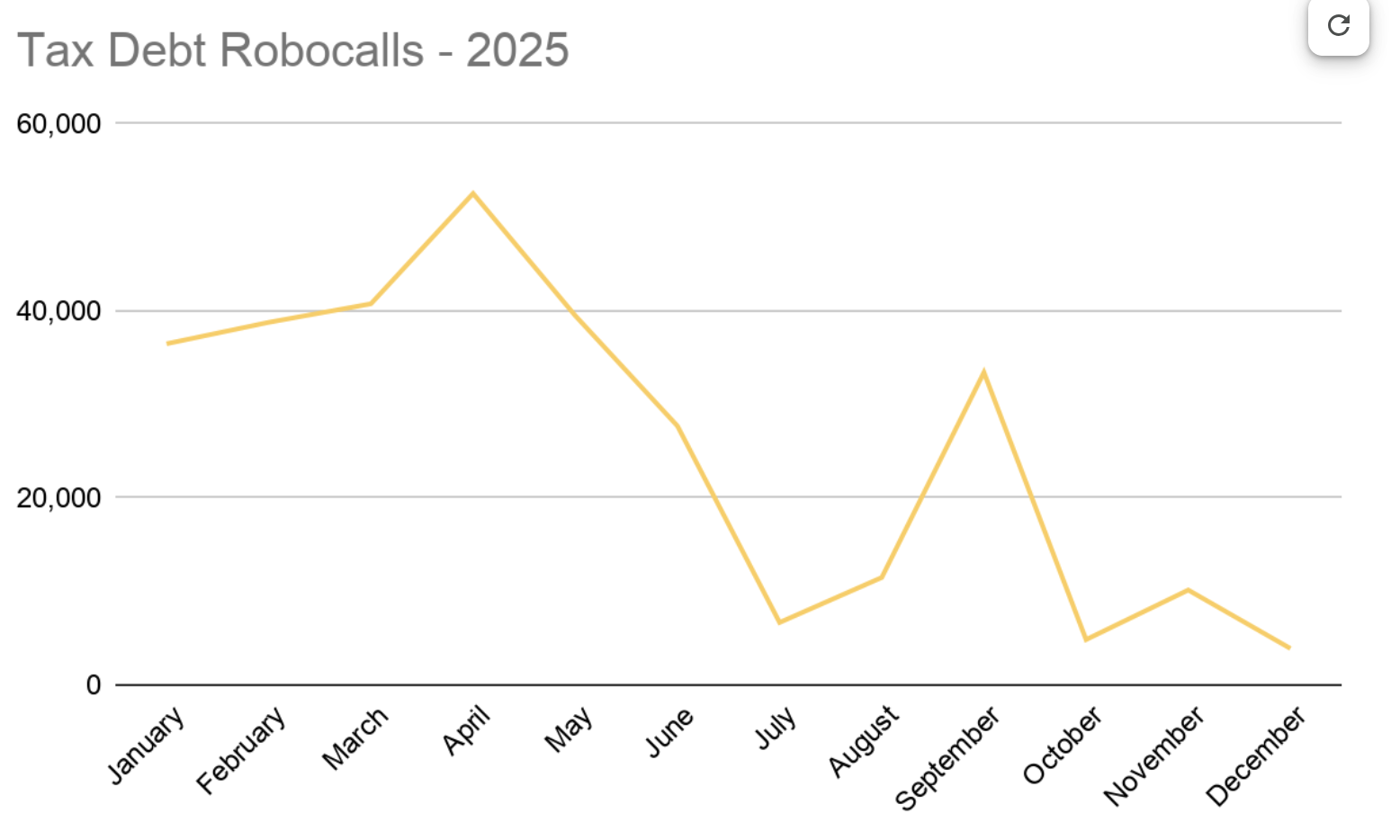
Tax debt scams
Tax debt robocalls peaked around March, April, and May, when taxes are already top of mind. Many of these calls claimed that past due tax debt could be reduced, invalidated, or forgiven.
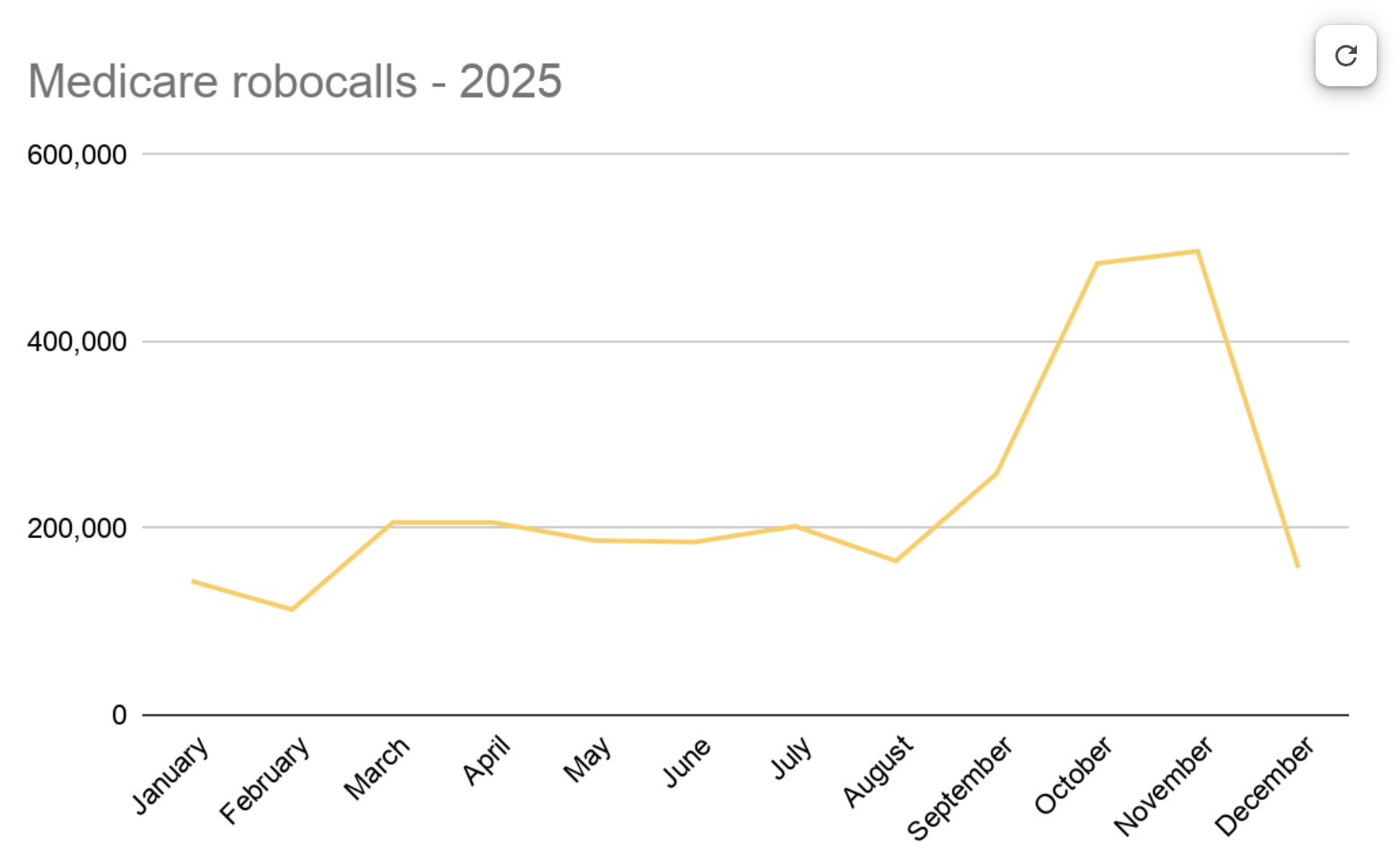
Medicare Robocalls
Medicare related calls surged sharply in October and November during Medicare Open Enrollment. That timing makes the calls feel more relevant and easier for people to mistake as legitimate.
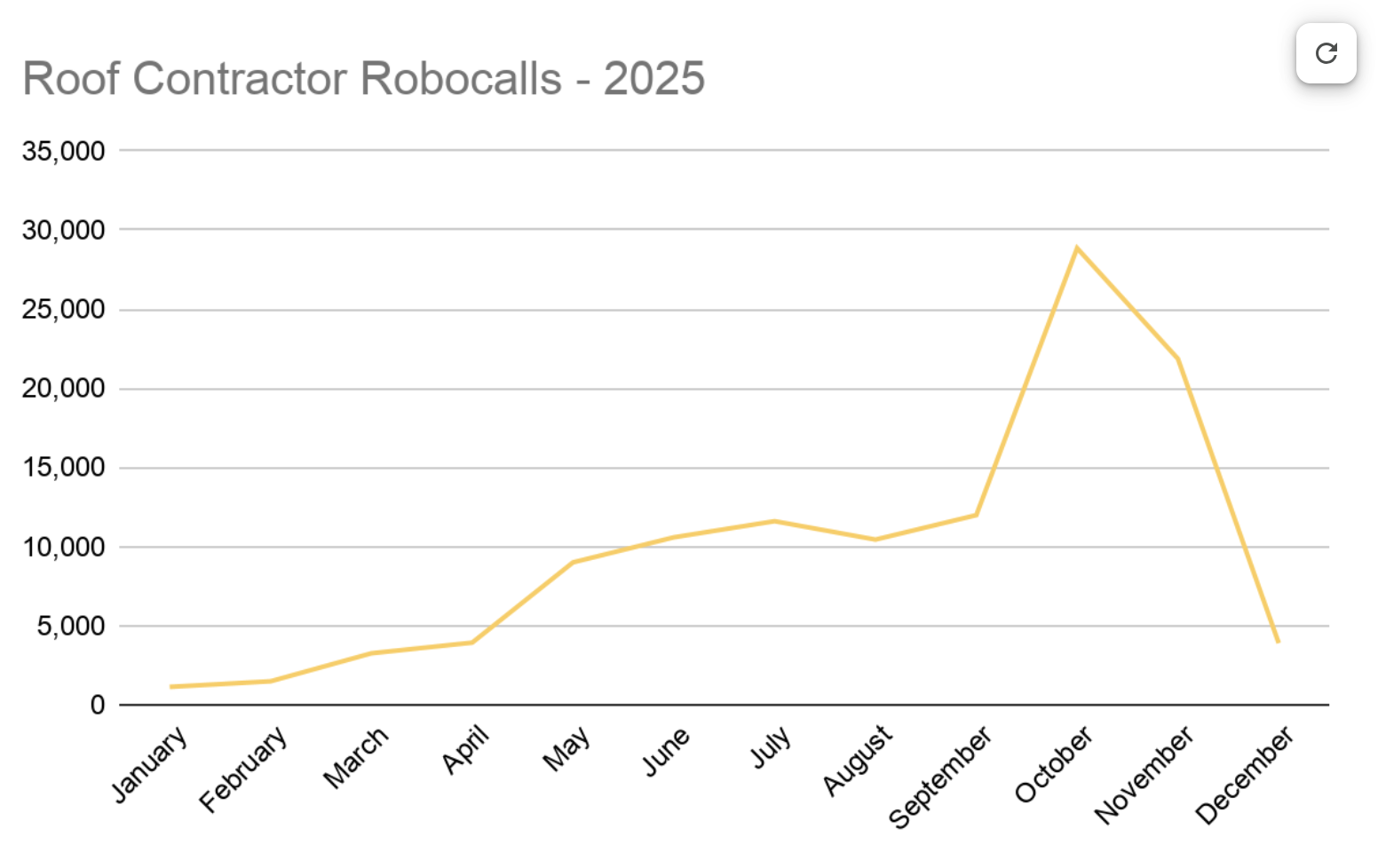
Roofing Contractor Robocalls
Roofing contractor robocalls increased in the fall, especially around September and October, when rain, snow, and storm season concerns make home repair offers more believable.
Solar Panel Robocalls
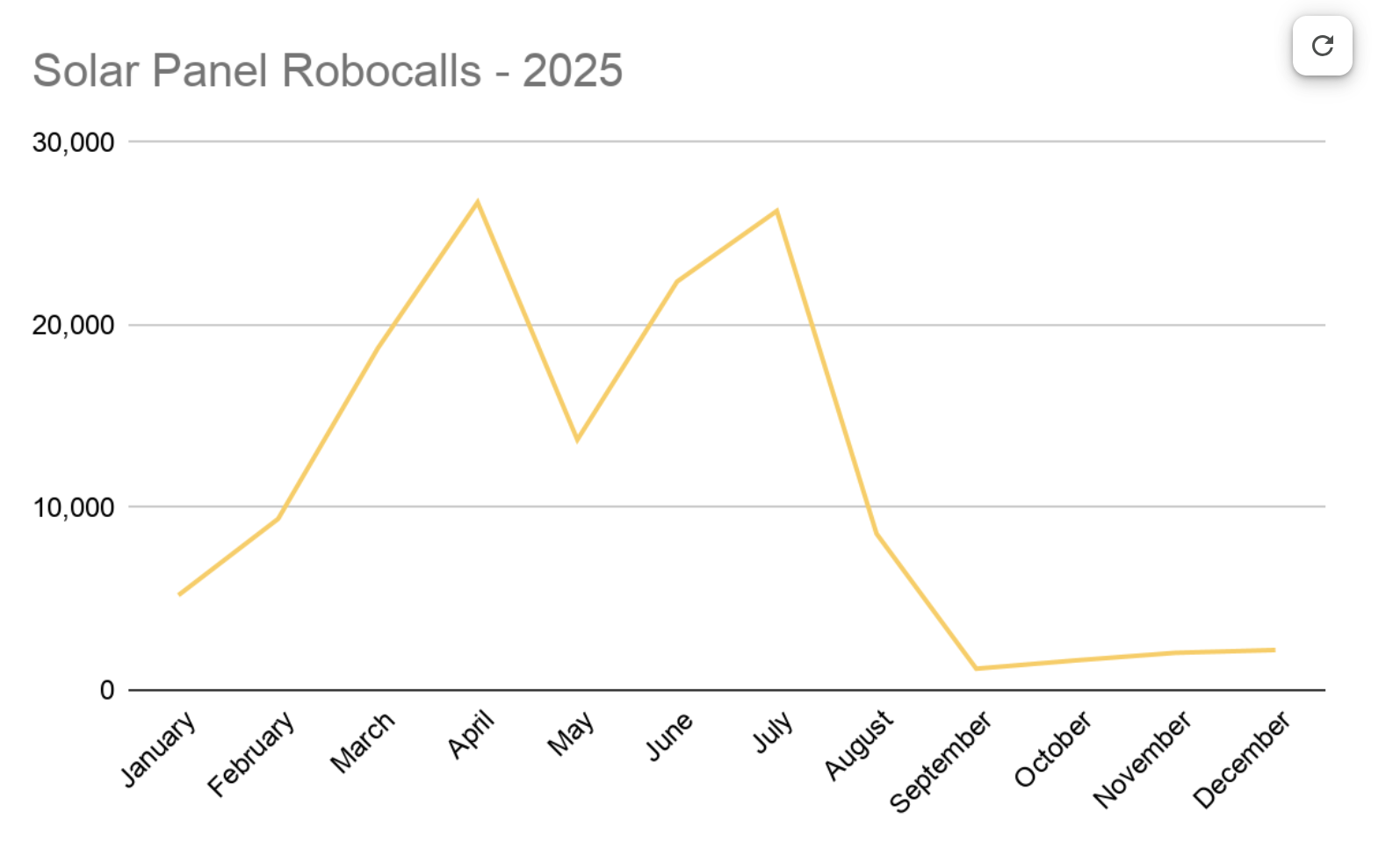
Solar panel robocalls rose in spring, dipped in May, then climbed again in June and July before dropping sharply later in the year. These calls often leaned on savings, rebates, and “free solar” messaging.
How Nomorobo fights back
Nomorobo does not guess what scammers are doing. We track it.
The Nomorobo Honeypot is one of the largest robocall monitoring systems in the industry, made up of 300,000 previously mothballed phone lines monitored by trained fraud investigators and telecom experts.
In 2025, the Honeypot received 75,917,343 phone calls, helping Nomorobo identify scam trends, analyze scripts, and improve blocking technology.