
Government Shutdown Scam Alert: Fake Agency Calls
June 16, 2026
Fake Bank Fraud Alert: iPhone Purchase Scam
June 24, 2026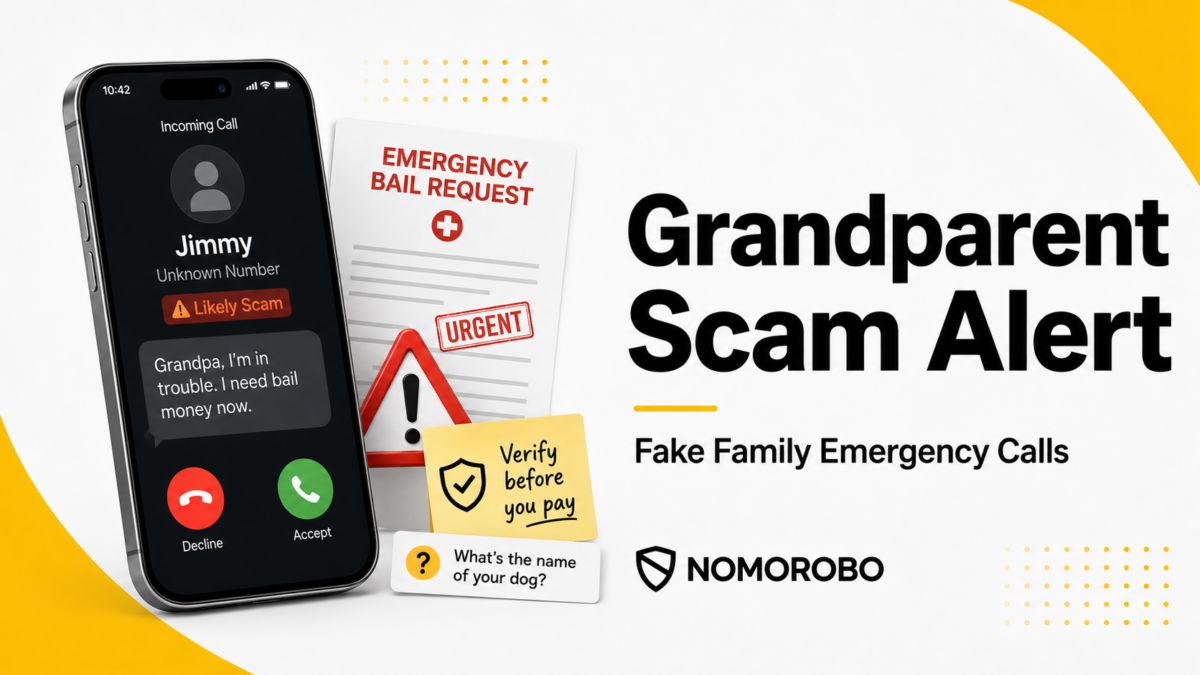
Jury Duty Scam Alert: The Fake Warrant Call
The phone rings. A shaky voice says, “Grandpa, I’m in trouble. I need you to bail me out of jail.”
Your heart drops. Your brain goes into rescue mode. And that’s exactly what scammers are counting on.
In this Fraud Fighters video, Nomorobo shows one of the most emotionally manipulative phone scams out there - the grandparent scam, also known as a family emergency scam. The goal is simple, scare you into sending money before you stop to verify who is really calling.
How the Grandparent Scam Works
Grandparent scams are designed to hit fast and hard. The caller pretends to be a grandchild, close relative, lawyer, police officer, or bail bondsman. They claim there has been an accident, arrest, medical emergency, or legal problem.
Then comes the pressure.
The scammer may say:
- “I’m in jail.”
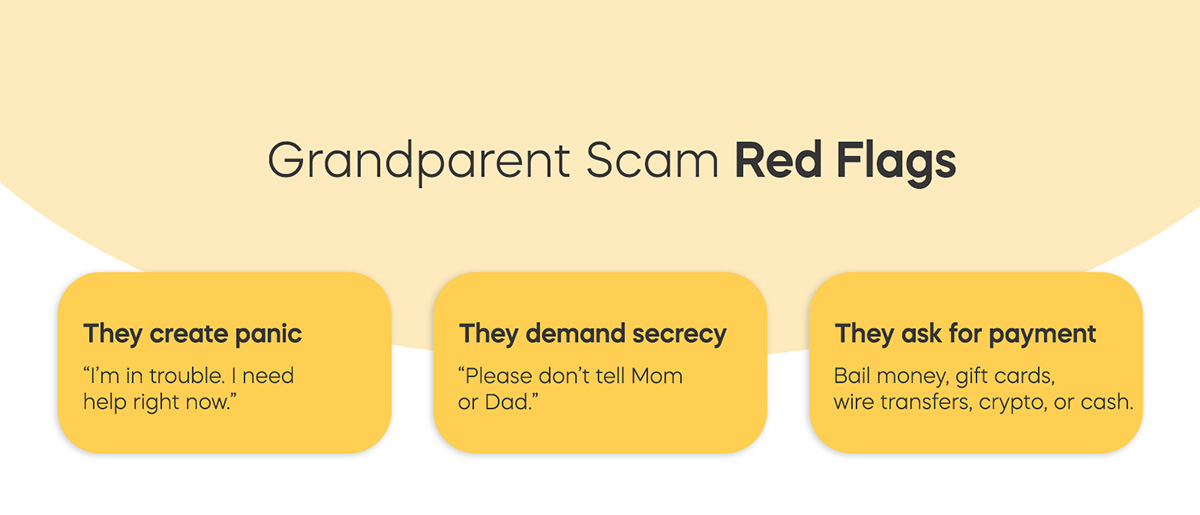
- “Please don’t tell Mom and Dad.”
- “I need bail money right now.”
- “My lawyer will call you with instructions.”
- “You’re the only person I can trust.”
The FTC warns that scammers often use urgency, secrecy, and emotional pressure in fake emergency scams, and may push victims to pay with wire transfers, cryptocurrency, payment apps, gift cards, or other hard-to-reverse methods.
Why These Calls Feel So Real
This scam works because it targets love, not logic.
Most grandparents would do anything to help a grandchild. Scammers know that. They want you scared, rushed, and focused on “saving” someone you love.
Today, these calls can be even more convincing because scammers may use details found online, spoof phone numbers, or even use AI voice cloning to imitate a loved one’s voice. The FTC specifically warns that scammers can use AI to clone a family member’s voice from short audio clips, and the FCC has also warned consumers that grandparent scams are becoming more sophisticated.
That means the voice on the phone is not enough.
Red Flags of a Grandparent Scam Call
Be especially suspicious if the caller:
- Claims to be a grandchild or relative in sudden trouble
- Says they were arrested, hospitalized, or in an accident
- Asks for bail money, legal fees, medical bills, or travel money
- Tells you not to tell anyone else
- Pressures you to act immediately
- Asks for payment by gift card, wire transfer, crypto, payment app, courier, or cash
- Says their phone is broken or they are calling from someone else’s number
- Avoids answering personal questions
A real emergency can wait long enough for one phone call. A scammer cannot.
Verify Before You Help
Here’s the simple rule:
Hang up. Call back. Verify.
Do not use the number that just called you. Call your grandchild, child, or family member using a number you already know and trust.
You can also ask a question only the real person would know, such as:
- “What’s the name of your dog?”
- “What did we do last Thanksgiving?”
- “What’s the nickname I use for you?”
- “What was the last movie we watched together?”
- “What’s something funny that happened on our last family trip?”
The FTC recommends resisting pressure, calling the person back using a trusted number, and checking with another family member or friend if you cannot reach them directly.
Make a Family Scam Safety Plan
This scam is much easier to stop when your family has a plan before the phone rings.
Try this:
- Create a family “safe word” for emergencies
- Make sure grandparents have updated phone numbers for children and grandchildren
- Agree that no real family emergency requires secrecy
- Talk about AI voice scams with older relatives
- Limit public details about travel, schools, birthdays, and family relationships online
- Use Nomorobo’s phone number lookup when a suspicious number calls
Scammers rely on confusion and fear. Nomorobo’s Fraud Fighters page is designed to help families hear real scam examples and learn the pressure tactics scammers use before they become victims.
What To Do If You Sent Money
If you already sent money or personal information, act quickly:
- Contact your bank, payment app, wire service, or gift card company immediately
- Tell them it was a scam and ask if the transaction can be stopped
- Save the phone number, voicemail, text messages, receipts, and payment details
- Report the scam to the FTC at ReportFraud.ftc.gov
- Contact local police, especially if cash was picked up by a courier
The faster you act, the better your chances of limiting the damage.
How Nomorobo Helps Protect Your Family
Grandparent scams are built to make your phone feel dangerous. Nomorobo helps make it safer.
Nomorobo blocks robocalls, scam calls, and spam texts before they reach you. You can also use the Nomorobo phone number lookup tool to check suspicious numbers and explore Fraud Fighters videos to learn what real scam tactics sound like. Nomorobo also offers Personal Information Protection to help reduce exposed personal data that scammers can use to make calls feel more convincing.
Sign up today for Nomorobo and protect your family from dangerous scam calls and texts.