Grandparent Scam Alert: The Fake Emergency Call
June 18, 2026
Tax Relief Scam Alert: The Fake Federal Tax Crisis Call
June 29, 2026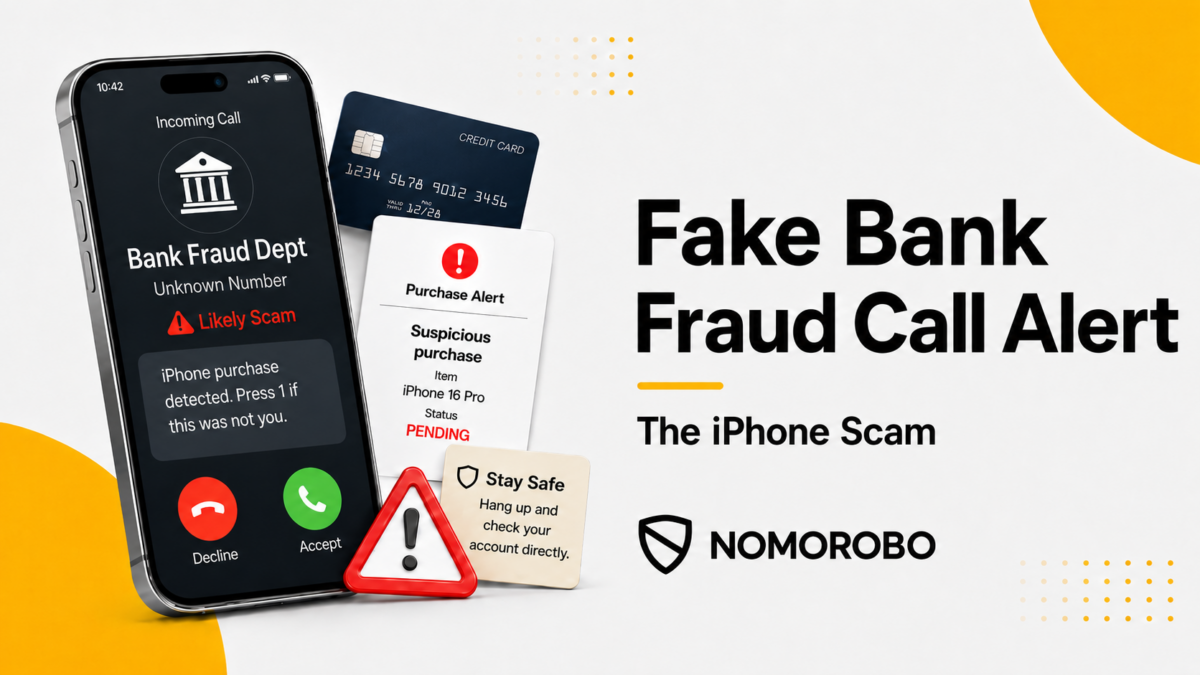
Fake Bank Fraud Call Alert: The $1,200 iPhone Scam
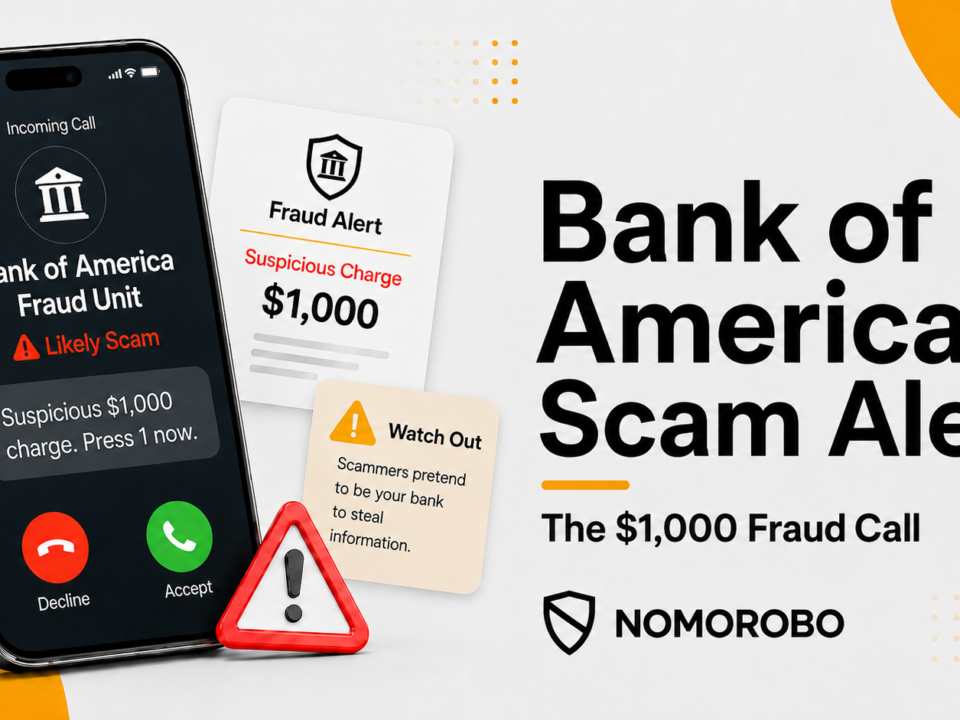
A call from your bank’s fraud department can make anyone nervous.
Especially when the message says someone just bought a $1,200 iPhone on your credit card.
That’s the hook in Fraud Fighters video:
“This is your bank’s fraud prevention department, and we see you have purchased a $1,200 iPhone on your credit card. If this was not you, press one now.”
It sounds urgent. It sounds official. And that’s exactly why it works.
In the video, the target almost reacts the way scammers want:
“Wait a minute. I haven’t charged an iPhone to my credit card. Someone must have stolen my number. Can you help me?”
But then they make the safer choice:
“I don’t know anything about that, but I will check it out on my own. Goodbye.”
That’s the move: hang up and verify directly.
How the Fake Bank Fraud Call Works
This scam usually starts with a robocall or live caller pretending to be from:
- Your bank
- A credit card fraud department
- Amazon, Walmart, Apple, or another well-known merchant
- A “security” or “fraud prevention” team
The caller claims there’s a suspicious purchase, then pushes you to respond fast:
- “Press 1 if this was not you.”
- “Stay on the line to stop the charge.”
- “Verify your identity.”
- “Move your money to protect it.”
The FTC warns that scammers use fake suspicious-purchase alerts to scare people into sharing information or moving money.
Red Flags of a Fake Bank Fraud Call
Be careful if the caller:
- Says there’s a large purchase you don’t recognize
- Asks you to press 1
- Requests your card number, password, PIN, or verification code
- Tells you not to hang up
- Pressures you to act immediately
- Asks you to transfer money, buy gift cards, use crypto, or move funds
A real bank will not pressure you to “fix” fraud through a random phone call.
What To Do Instead
Hang up. Don’t press anything. Check directly.
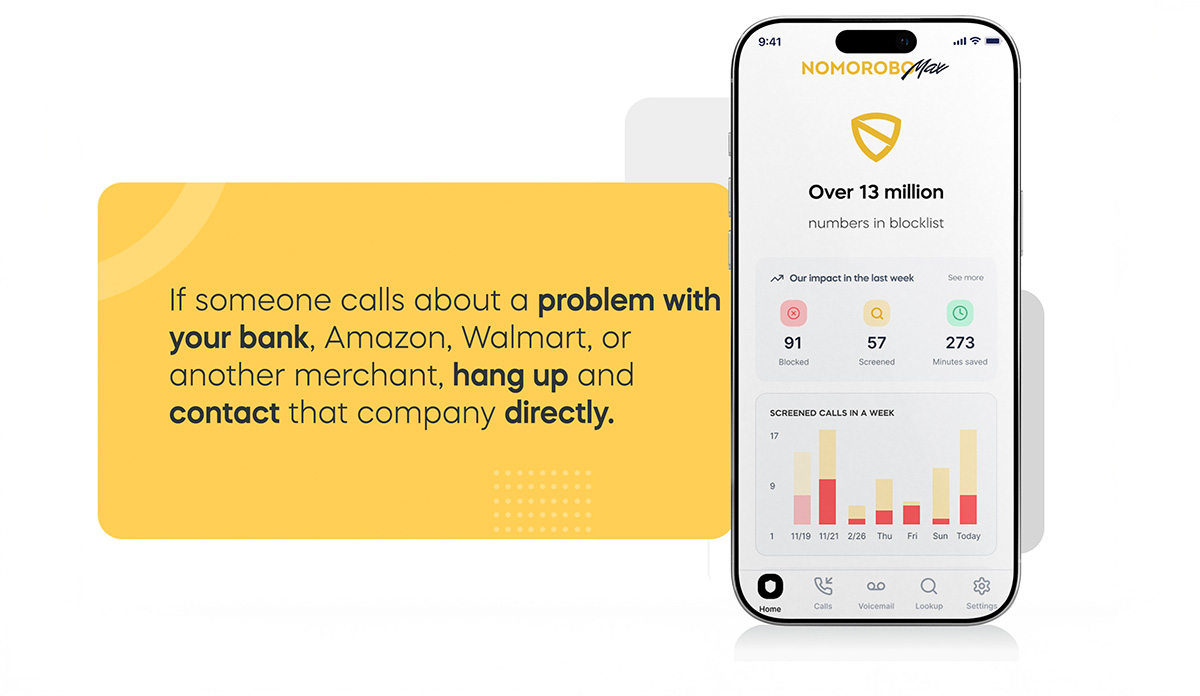
If the call claims to be from your bank, use the number on the back of your card or log in to your official banking app.
If it claims to be from Amazon, Walmart, Apple, or another merchant, go directly to that company’s official website or app.
You can also use Nomorobo’s Spam Phone Number Lookup to check suspicious numbers.
What If You Already Pressed 1?
Pressing 1 does not automatically mean your money is gone, but it may connect you to a scammer.
Take these steps:
- Hang up immediately
- Check your bank account directly
- Change passwords if you shared login details
- Contact your bank if you shared card numbers or verification codes
- Report the scam at ReportFraud.ftc.gov
How Nomorobo Helps
Scammers rely on panic. Nomorobo helps stop scam calls, robocalls, and spam texts before they get a chance to pressure you.
And with Fraud Fighters, you can hear real scam examples and learn what these tricks sound like before they reach your phone.
If someone calls about a suspicious charge, don’t press 1.
Hang up. Go direct. Verify on your own.
Sign up today for Nomorobo and protect your family from dangerous scam calls and texts.