Jury Duty Scam Alert: The Fake Warrant Call
June 11, 2026
Grandparent Scam Alert: The Fake Emergency Call
June 18, 2026
Government Shutdown Scams Spike as Fraudsters Pose as Fake Agencies
A recent news report highlighted a troubling trend: scammers are using the government shutdown as a new opening to target consumers.
According to the report, fraud attempts are surging nationwide. In Texas, robocall trackers like Nomorobo say scam calls are up as much as 70%.
Scam calls are not new. But the government shutdown gives fraudsters something they love: confusion.
When people are unsure which agencies are open, whether services are delayed, or how to verify information, scammers can make fake calls sound more believable.
What the Report Warned About
The segment explained that scammers are now posing as fake government agencies using official-sounding names, such as tax departments or revenue departments.
These names may not be real, but they sound close enough to create doubt.
That uncertainty is the scammer’s opportunity.
As the report explained, the combination of urgency and confusion is what fraudsters are trying to exploit. They want people asking:
- Is this real?
- Can I verify it during a shutdown?
- Will I lose money, benefits, or access if I ignore it?
- Do I need to act right now?
That is the moment scammers try to get victims on the phone.
Once they have someone engaged, they may ask for personal information, financial details, or payment. They may also push people to press buttons, stay on the line, or get transferred to another “department.”
Experts in the segment warned viewers to hang up immediately if they receive a call like this. Do not press any buttons. Do not give out personal information. You could be transferred or even charged without knowing it.
The safest move is simple: hang up, then verify directly through an official website or phone number.
Why Shutdown Scams Work
Shutdown-related scams work because they borrow credibility from real world confusion.
A fake “Revenue Department” call may sound more believable if someone has already heard that government services are delayed. A fake “tax department” call may feel urgent if the caller claims an account, refund, payment, or benefit is affected.
That does not make the call real.
Government imposters often use fear, urgency, and official-sounding language to pressure people. The FTC warns that government agencies will not call unexpectedly to ask for sensitive information like a Social Security number. The FCC also advises people who receive a suspicious call claiming to be from a company or government agency to hang up and call back using an official number.
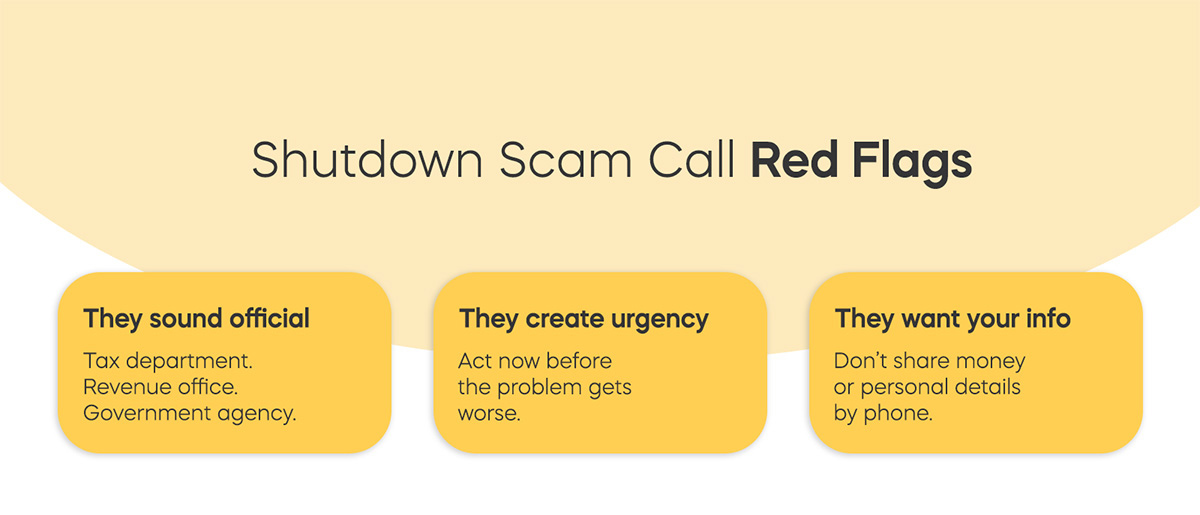
A few red flags to watch for:
- The caller claims to be from a tax, revenue, or government agency you do not recognize.
- They say the shutdown created an urgent issue with your account, benefits, refund, or payment.
- They ask you to press a button to be connected.
- They ask for personal or financial information.
- They demand payment over the phone.
- They tell you not to hang up or not to contact anyone else.
Real government agencies do not need to pressure you into making a rushed decision over the phone.
What You Should Do
If you receive a suspicious call tied to the government shutdown, hang up.
Do not press buttons. Do not confirm your identity. Do not share your Social Security number, Medicare number, banking details, tax information, benefits information, or credit card number.
Then verify the claim directly.
Go to the agency’s official website yourself, or use a phone number from an official statement, letter, card, or trusted government site. Do not use the number provided by the caller, and do not rely on caller ID.
If the call was a scam, report it to the FTC at ReportFraud.ftc.gov.
You can also use Nomorobo’s Spam Phone Number Lookup to check suspicious numbers before calling back.
Nomorobo Helps Stop Scam Calls Before They Reach You
Scammers use moments of uncertainty to get people to answer, react, and share information.
Nomorobo helps block scam calls, robocalls, and spam texts before fraudsters get the chance to exploit confusion.
Sign up for Nomorobo today and help protect your phone from fake government agency calls and other phone-based scams.