News 5 Highlights Nomorobo Data on Medicare Calls
November 3, 2026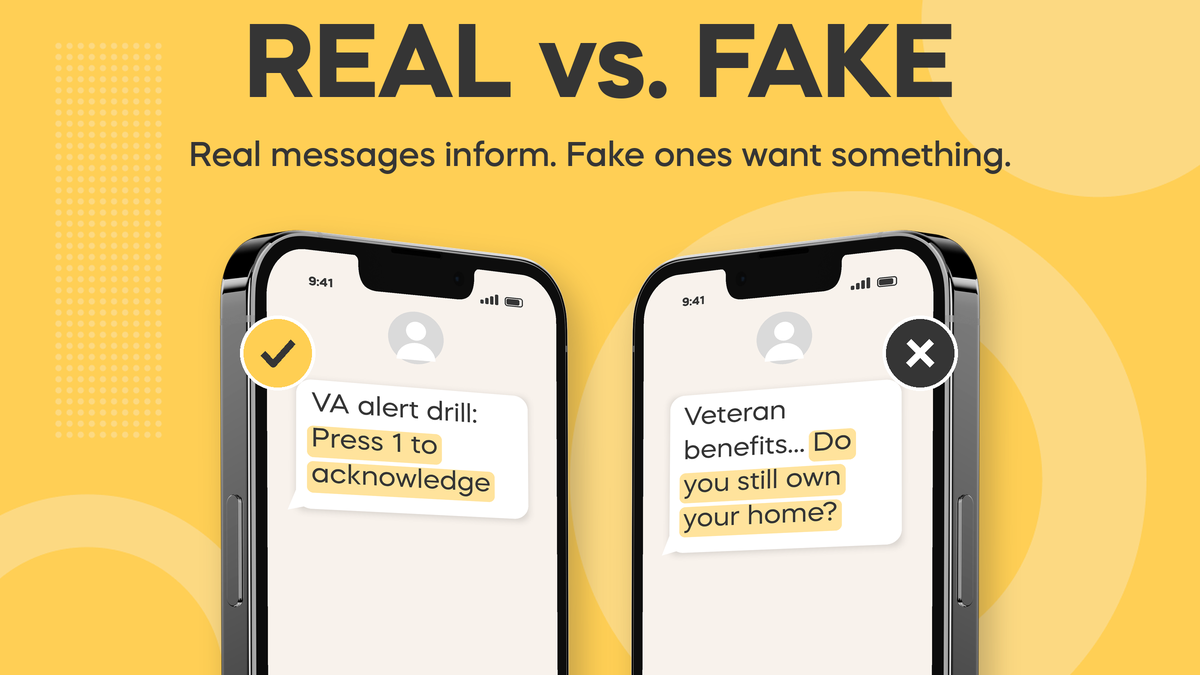
Thank You for Your Service. Now Hang Up on This Call.
Today is Veterans Day and phones are buzzing with messages that mention veterans. Most are exactly what they look like.
But some calls use the word "veterans" as a way in. Over the past month (October 11 to November 11, 2026), Nomorobo's honeypot, a network of phone numbers we use to catch robocalls and robotexts, picked up both kinds. Putting them side by side shows one simple rule:
Real messages inform. Fake ones want something: your house, your card, or your code.
Listen for yourself. Below are two real recordings from our honeypot: a genuine VA alert and a "veteran benefits" pitch. Play them one after the other and notice what each call asks you to do.
Genuine VA alert
"Veteran benefits" pitch
What real looks like
A real VA drill that asks for nothing
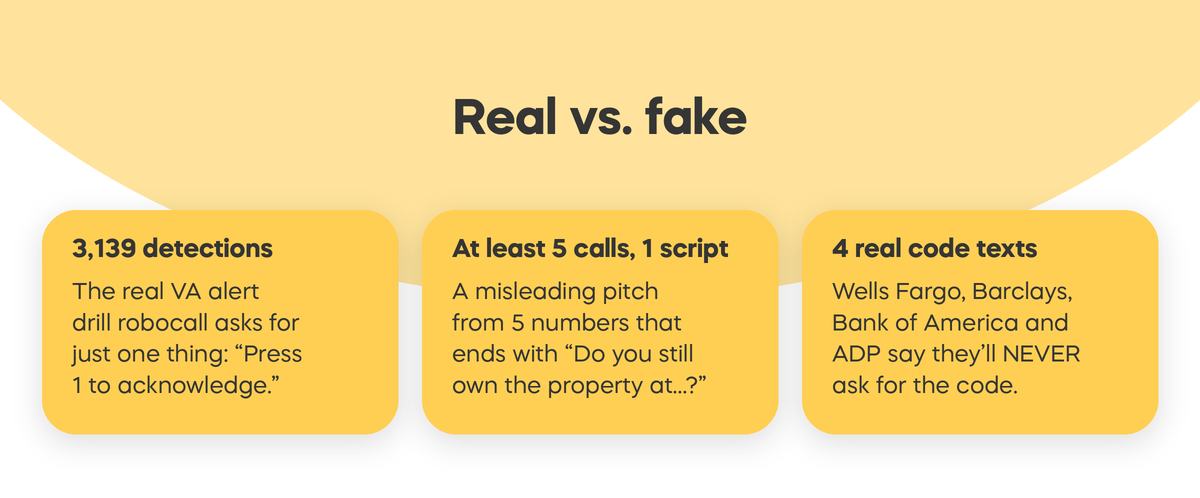
Our honeypot caught one Department of Veterans Affairs robocall 3,139 times between October 11 and November 5. It was an internal emergency-alert exercise, most likely reaching recycled phone numbers:
"This is an important message from Department of Veterans Affairs. November Notification Exercise Response Required. This is a required quarterly exercise of the [VA facility] Emergency Alert System... Please acknowledge receipt of this alert. Please select from the following response options: 1 Acknowledge."
It names a specific facility and purpose and asks only for an acknowledgment. No money, no personal details, no callback number.
Real bank texts warn you about scammers
One-time code texts from banks and payroll companies each come with a warning:
- Wells Fargo: "Wells Fargo will NEVER call or text you for this code. DON'T share it."
- Barclays: "Only share this code if you contacted us directly. We'll NEVER contact you for it."
- Bank of America (Zelle): "DO NOT share this Zelle Payment code... We NEVER call or text for it."
- ADP: "Never share this code with anyone, even if they say they are from ADP."
If anyone calls or texts asking for a code, that alone tells you it's a scam.
Real Veterans Day notices are just information
We also caught plenty of ordinary Veterans Day messages: a school saying it is "closed tomorrow, November 11th, for Veterans Day. We thank all of our veterans for their service," city hall closures and trash pickup alerts. Dates and details, no ask.
What fake looks like
The "veteran benefits" call that's really about your house
Our honeypot recorded at least five calls from five different phone numbers, each from a different agent, all using the same script. The callers identified themselves as being with "US Affairs Group":
"My name is [agent] with US Affairs Group, and what I do is reach out to veterans and their spouses regarding new programs and benefits that may be available to them... Do you still own the property at [address]?"
It opens with veterans and benefits, then within seconds asks whether you still own your home. It never names a program, an agency or what the "benefits" are.
Comparison
Now compare the two clips above. The VA call tells you what it is and asks for nothing. The second one is vague about the benefits and specific about your house.
We can't say what happens later in these calls, and we're not calling it a crime. But it's a classic bait-and-switch: a veteran-benefits opener that turns into a real-estate lead.
| Real messages | Fake or misleading messages |
|---|---|
| Name a specific organization, place or event | Talk vaguely about "new programs and benefits" |
| Inform you: dates, closures, alerts | Pivot to your home, your money or your account |
| Ask for nothing, or only a simple acknowledgment | Ask for card photos, codes, payments or personal details |
| Remind you never to share codes | Ask you to share a code |
| No pressure | Push you to act now or confirm details on the spot |
What to do when a call or text mentions your benefits
- Hang up and call back on a number you find yourself. Never use a number given to you in the call or text.
- Check with the VA directly. The VA's official number is 1-800-827-1000, and the official website is VA.gov.
- Don't confirm your address or say whether you own your home. A real benefits office doesn't open a call that way.
- Never share a one-time code, a card number or a photo of your card. Your bank has already told you it will never ask.
- Share this with the veterans in your life. Parents, grandparents, neighbors. A two-minute conversation today can save a lot of trouble later.
- Report it. Tell the FTC at ReportFraud.ftc.gov
If you are not sure, you can paste it into Nomorobo's Scam Detector before you reply.
To every veteran and military family: thank you for your service. You've earned your benefits, and nobody should use them as a way to get to your front door.