Nomorobo Landline Protection Is Back
October 1, 2026
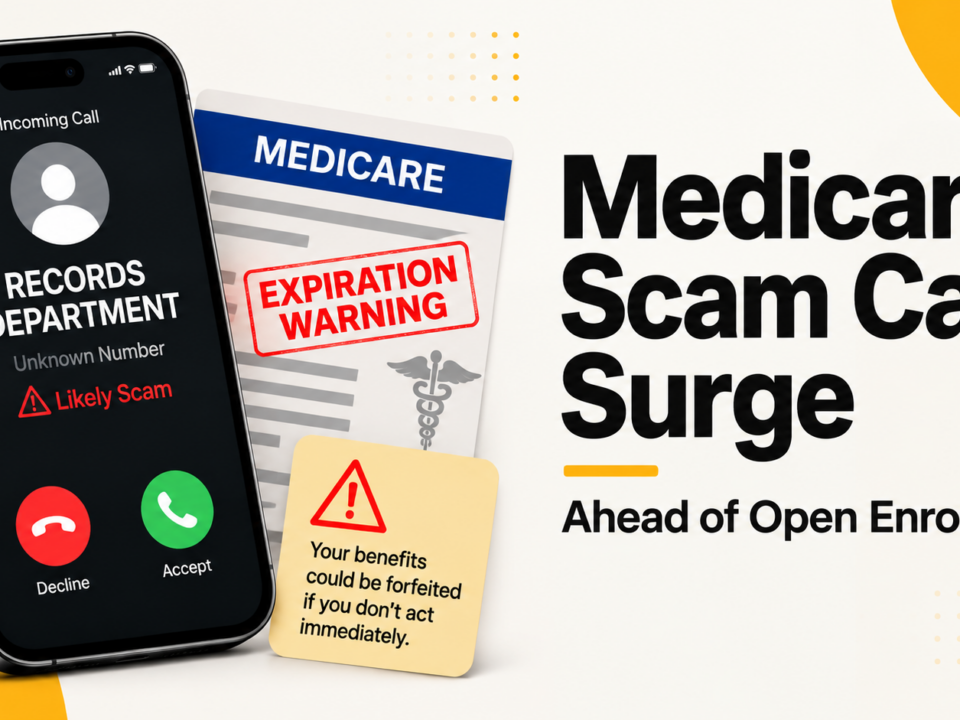
Medicare Grocery Allowance Calls: Don’t Let a Benefits Pitch Rush You
Your phone rings. The caller says you have money waiting for groceries but unless you act now, someone else could get it.
That is the pitch in one Medicare-related call captured by Nomorobo’s honeypot. Another warns that a missing “status check” could delay your enrollment for 2027.
Both give you a reason to worry, then offer a quick way to fix the supposed problem. Before you answer their questions, here’s what to know.
What Nomorobo’s Medicare Call Data Shows
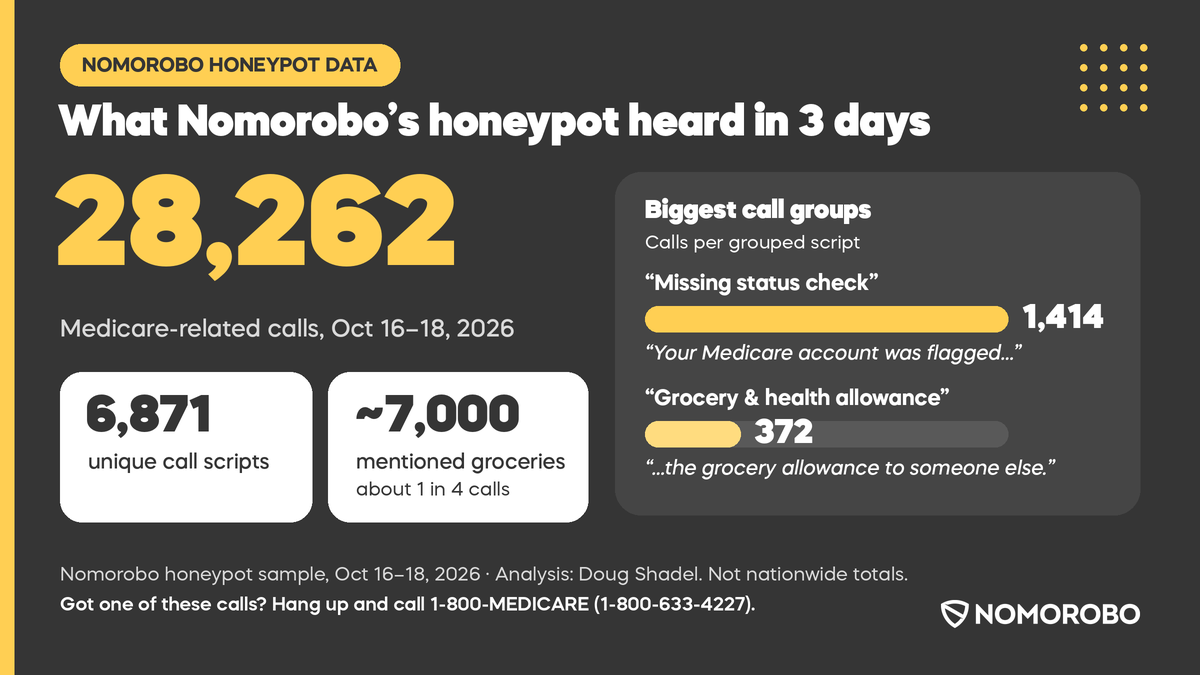
Our fraud researchers identified 28,262 Medicare-related calls collected by the honeypot between October 16 and October 18, 2026.
His analysis reported 6,871 unique transcripts and approximately 7,000 calls mentioning groceries.
The accompanying top 10 spreadsheet also identified:
-
1,414 calls in the group represented by a “missing status check” transcript.
-
372 calls in the group represented by a grocery and health allowance transcript.
Those examples reveal a pressure tactic worth recognizing: make a benefit sound available, then threaten to take it away.
“Your Grocery Allowance Could Go to Someone Else”
The representative transcript for the second-highest-frequency call group features a caller introducing himself as Abraham from the “senior support desk.” He claims the recipient’s health and grocery allocations are waiting to be activated.
Then comes the pressure:
“So, basically, if we don't put a freeze on your file, the system just automatically reallocates that give back cash and the grocery allowance to someone else.”
The caller repeatedly asks whether the recipient has Medicare Part A and Part B.
Notice what is missing: a clearly identified insurance plan, written benefit details, or an explanation of eligibility. Instead, the caller suggests that staying on the phone is necessary to prevent a loss.
Shadel’s assessment was that the grocery offer may be a sales hook for Medicare Advantage plans during open enrollment. The transcript alone does not establish what would happen next, but the urgency and vague claims are reasons to stop and verify.
Your grocery budget deserves better than a mystery caller’s countdown.
“Your Medicare Account Was Flagged”
The representative transcript for the highest-frequency call group uses a different opening. A caller named Lisa claims:
“I'm reaching out because your Medicare account was flagged for a missing status check, which is delaying your 2027 annual enrollment processing to avoid any coverage delays.”
She then repeatedly asks whether the recipient has Medicare Parts A and B.
The pitch makes an administrative problem sound urgent before moving into questions about coverage. Official-sounding phrases such as “flagged,” “status check,” and “enrollment processing” do not prove the caller has access to your account.
Medicare says it will never call you uninvited and ask for personal or private information. If a caller asks for information or threatens your benefits, hang up and contact Medicare directly. Read Medicare’s guidance on protecting your information.
Are Medicare Grocery Benefits Real?
Some Medicare Advantage plans can offer food or produce benefits to qualifying members through special supplemental benefits for people with chronic conditions. That does not mean everyone with Medicare Parts A and B automatically qualifies for a grocery allowance.
A real benefit depends on the plan’s terms and eligibility requirements. An unexpected caller’s promise is not confirmation that money is waiting for you.
Before considering an offer, check directly with the plan:
-
Does this specific plan include a food or grocery benefit?
-
What requirements must I meet?
-
How much is available, and what purchases are covered?
-
Would I have to change plans to receive it?
-
Would that change affect my doctors, prescriptions, or other costs?
An attractive extra benefit should never replace a careful look at your health coverage.
Why Open Enrollment Makes These Calls Timely
Medicare Open Enrollment runs from October 15 through December 7, 2026, when people can compare coverage options for 2027. Plan costs and benefits can change from year to year, making this a useful time to review your coverage.
See CMS’s 2027 enrollment information.
That creates a convincing backdrop for callers talking about next year’s benefits. A real enrollment season can make an invented deadline sound believable.
Red Flags
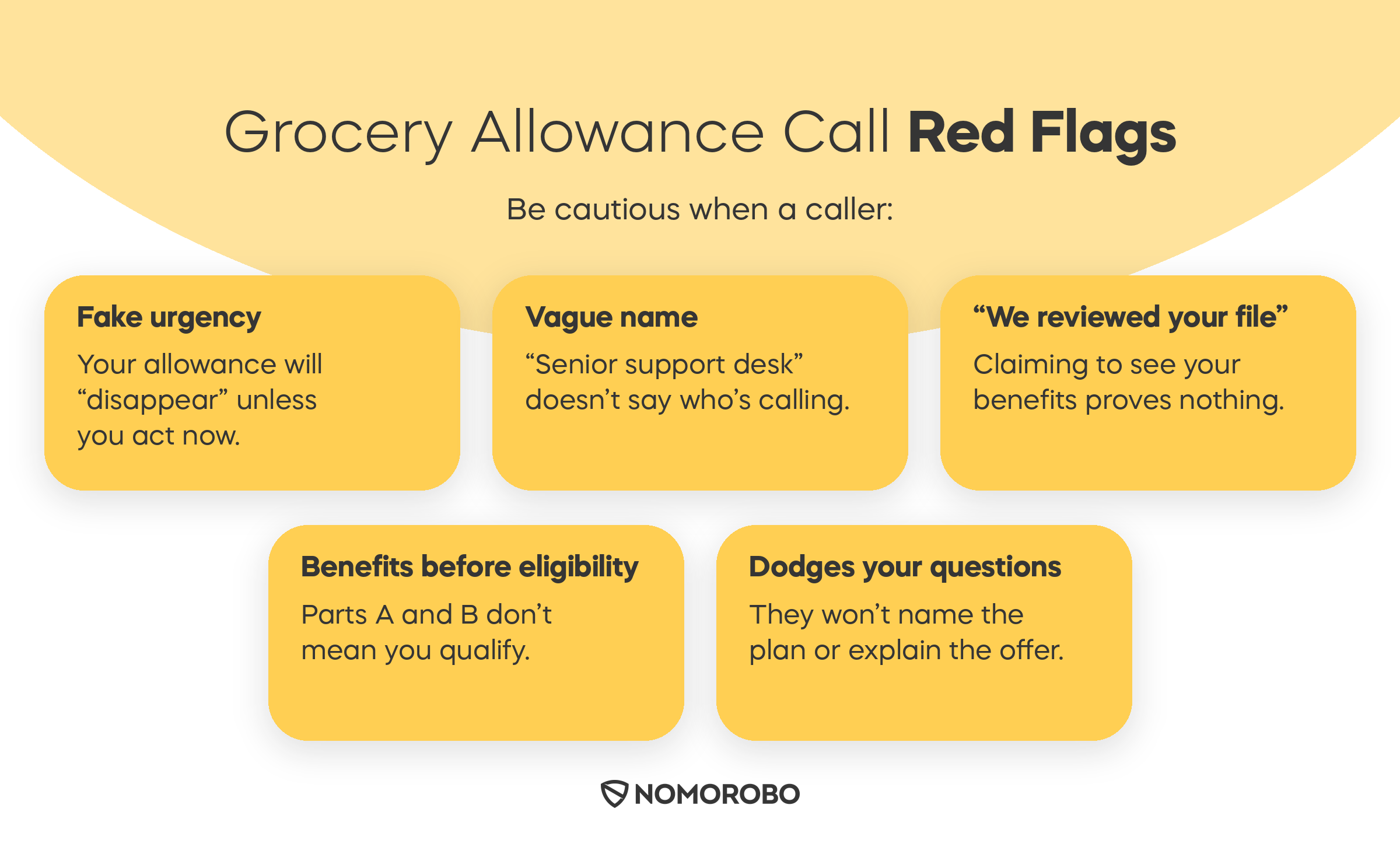
Be cautious when a caller:
-
Threatens an immediate loss. Your allowance will supposedly disappear unless you respond now.
-
Uses a vague official-sounding name. “Senior support desk” does not tell you which organization is calling.
-
Claims to have reviewed your file. Saying they can see your benefits does not make it true.
-
Promises benefits before explaining eligibility. Having Parts A and B is not proof you qualify for a particular grocery benefit.
-
Pushes past your questions. Repeating a coverage question is no substitute for identifying the plan and explaining the offer.
What to Do If You Get One of These Calls
You do not have to decide whether the caller is committing fraud before ending the conversation.
-
Hang up. You can investigate an offer without staying on an unexpected call.
-
Keep your information private. Do not give an unverified caller your Medicare number, Social Security number, or payment details.
-
Verify through a trusted channel. Call the number on your plan card or dial 1-800-MEDICARE (1-800-633-4227).
-
Compare coverage independently. Use the official Medicare Plan Finder to review 2027 options.
-
Report suspected fraud. Tell Medicare what the caller claimed and whether you shared any information.
-
Add call protection. A service such as Nomorobo can help block unwanted robocalls and reduce interruptions from suspicious callers.
Fraud Fighter Pro Tip: If an offer sounds useful, write it down and check it yourself. You can explore a real benefit without letting an unknown caller control the conversation.
Already Shared Your Medicare Number?
Contact 1-800-MEDICARE and explain what happened. Review your Medicare claims and plan statements for services or supplies you did not receive, and report anything suspicious.
Do not let embarrassment keep you from taking action. These calls are designed to sound helpful, and reporting quickly gives you a chance to address possible misuse.
Keep the Benefits Research. Lose the Unwanted Calls.
Open enrollment is a time to make informed decisions about your coverage. An unsolicited caller’s warning about disappearing grocery money should not make those decisions for you.
Verify the offer, protect your information, and give yourself time to compare your options.
Get started with Nomorobo and help protect your phone from unwanted robocalls and scams.
Visit our Fraud Fighters page to explore more examples of scams hitting American phone lines and learn how to recognize their tactics.
Don't panic. Don't share. Hang up and verify.