
How to Spot Scams That Hijack Real News | NBC Phoenix
August 18, 2026
Wrong Number Scam Texts: New Consumer Study
September 7, 2026
3 QR Code Scams Hiding in Places You Normally Trust
A package lands on your doorstep. You park your car. You receive what looks like an official court notice.
None of those situations immediately screams scam.
But scammers are increasingly using QR codes to turn ordinary, trusted situations into opportunities to steal payment information, passwords and personal data.
And the trick is surprisingly simple: get you to scan before you stop to verify.
Here are three real-world QR code scams consumers should know about.
1. The Mystery Package With a QR Code
Imagine receiving a package you never ordered.
There is no familiar sender. Maybe there is merchandise inside. Maybe there is simply something encouraging you to scan a QR code.
Curiosity does the rest.
In July 2025, the FBI warned about a variation of the so-called brushing scam in which criminals send unsolicited packages containing QR codes.
According to the FBI, scanning the code can lead victims to fraudulent websites designed to collect personal or financial information or potentially trick them into downloading malicious software.
The lack of sender information may even be intentional. The mystery gives you a reason to scan.
The FBI noted that this particular scheme was not as widespread as some other fraud methods, but warned consumers to be aware of it.
The safest response is simple: if you did not order the package, do not scan an unfamiliar QR code inside it.
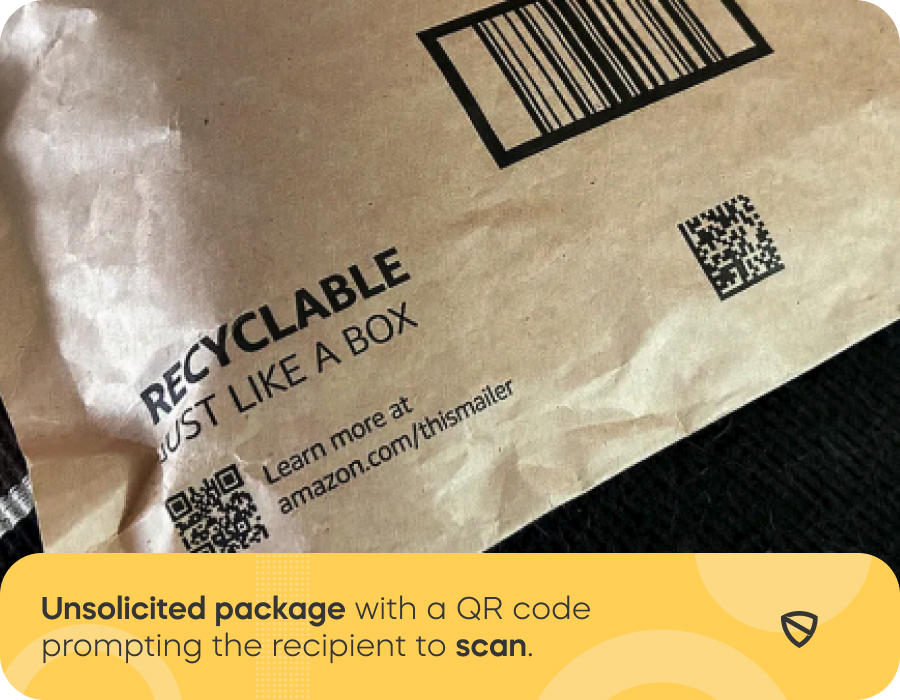
Source: Fox News coverage of the FBI warning.
2. Fake QR Codes Are Showing Up on Parking Meters
You finally find a parking spot.
You see a QR code, scan it, enter your card information and walk away.
Easy.
Unfortunately, scammers know that's exactly how people expect the process to work.
One of the earliest widely reported waves happened in Texas in 2022. Austin officials discovered fraudulent QR-code stickers on 29 public parking pay stations. The codes directed drivers to a website that was not part of Austin's parking-payment system. Similar activity had also been reported in San Antonio, while Houston warned drivers to be on alert.
The tactic didn't disappear.
In June 2025, the New York City Department of Transportation issued its own warning after a fraudulent QR-code sticker was discovered on a ParkNYC meter.
NYC DOT made one point especially clear: ParkNYC meters do not use QR codes for payment. Anyone seeing one on a meter should consider it suspicious.
Then came a particularly painful example in Florida.
FOX 13 Tampa Bay reported that a woman in St. Petersburg scanned what she believed was the QR code for her parking payment. Within about a minute, alerts began appearing for multiple unauthorized credit-card charges totaling roughly $1,000.
Her bank caught the activity and she ultimately wasn't charged, but the incident showed how quickly a convincing fake payment page can do its job.
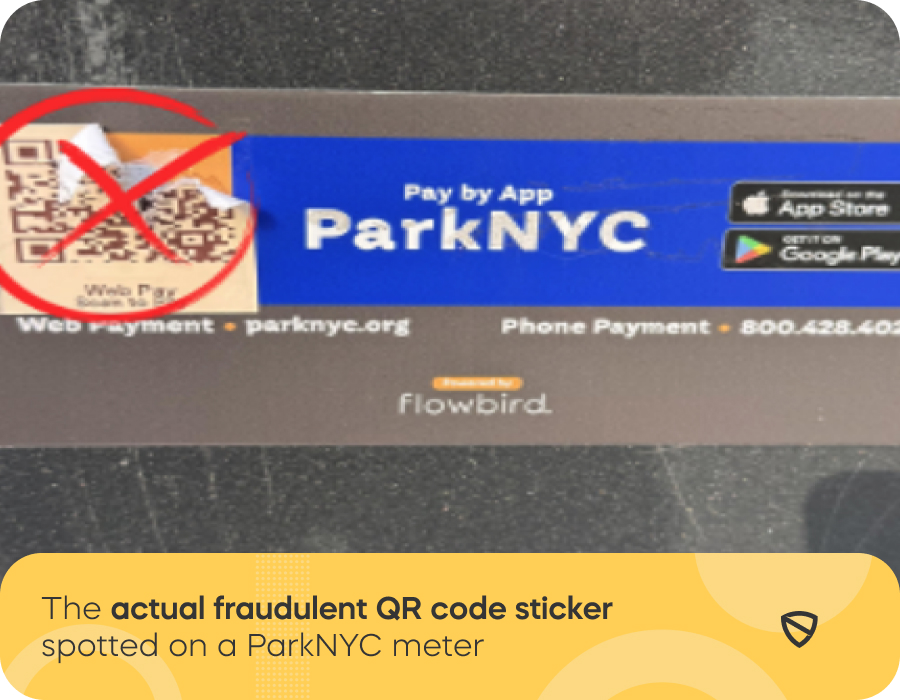
Official photo from the NYC DOT scam advisory.
3. The QR Code Comes Inside an “Official” Court Notice
The third version adds something scammers love even more than convenience - fear.
In March 2026, the Florida Department of Highway Safety and Motor Vehicles warned residents about counterfeit court notices claiming recipients owed money for traffic or toll violations.
Some looked surprisingly official. They could include references to Florida statutes, fabricated case numbers, threats of license suspension or other penalties and a QR code leading to an unauthorized payment portal.
Pennsylvania residents were targeted with a similar scheme.
Philadelphia Courts issued a statewide warning about text messages claiming to be a “Notice of Hearing - TOLL VIOLATION.”
Recipients were told they could either appear for a hearing or resolve the supposed violation by paying through a QR code.
There was one problem.
The notice was fake.
Philadelphia Courts explicitly warned consumers not to scan the code and said the courts would never send a text demanding payment for tolls, parking or other violations.
The FTC later warned consumers about the same broader scam pattern: official-looking traffic notices, fake hearing dates, threats of consequences and a QR code offering a fast way to make the problem disappear.
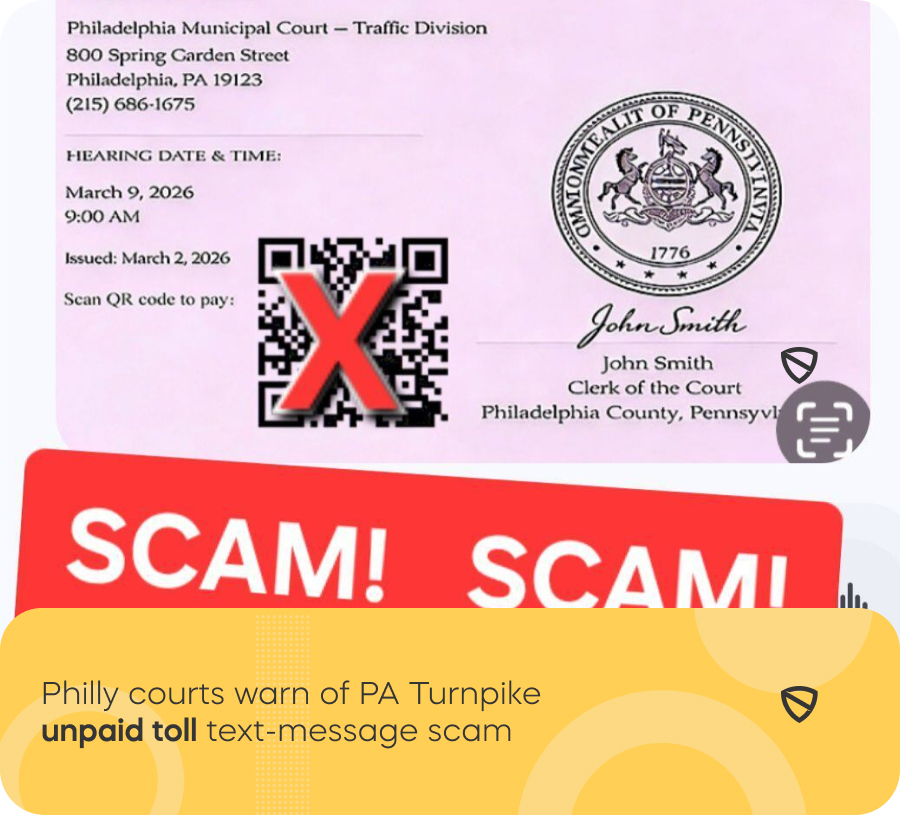
Official photo from the Inquirer.com.
Before You Scan a QR Code, Do This
A few seconds of verification can save you a much bigger headache.
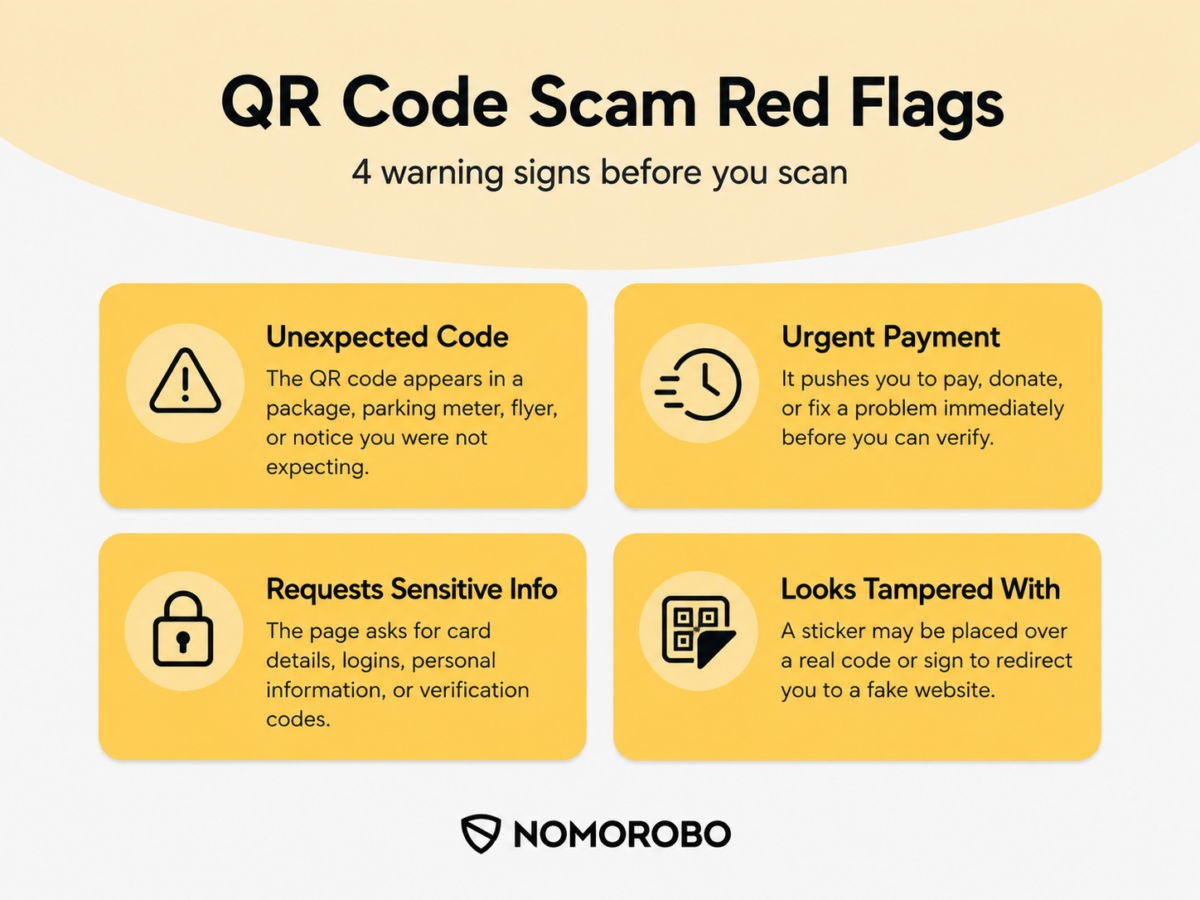
- Look for signs of tampering. A sticker placed over another QR code is a major warning sign.
- Check the destination before continuing. Look closely at the website address before entering any information.
- Use official apps or websites for payments. For parking, tolls, banks and government services, open the official app or type the known website yourself.
- Don't scan codes from unexpected packages. If you did not order it, curiosity is not a good reason to scan.
- Verify threatening notices independently. Contact the court, government agency or company using contact information you find yourself, not information contained in the suspicious message.
- Never let urgency make the decision for you. A demand to act immediately is a reason to verify, not a reason to hurry.
Not sure if that message is real?
Scammers Change the Delivery Method. The Playbook Stays the Same.
A robocall asks you to press 1.
A text tells you to click a link.
A QR code tells you to scan.
Different technology. Same objective: get you to act before you have time to question what's happening.
If a suspicious QR code arrives inside a text, email or social media post, take a screenshot and run it through Nomorobo Scam Detector. It checks suspicious content for common scam tactics and explains the warning signs it finds.
And when scammers try to reach you by phone or text, Nomorobo can help stop unwanted calls and messages before they get the opportunity.