Bank of America Scam Alert: Fake $1,000 Fraud Call
August 17, 2026
3 QR Code Scams to Watch: Packages, Parking & Tolls
August 24, 2026
How Scammers Hijack Breaking News to Steal Your Money
Breaking news can make people want to act fast.
Unfortunately, scammers know that too.
In a recent NBC Phoenix interview, Nomorobo Managing Director Matt Mizenko explained how fraudsters capitalize on high-profile investigations, natural disasters and other major news events to trick people into sending money or revealing personal information.
The discussion followed a warning from the Pima County Sheriff’s Department about QR codes requesting money in connection with the Nancy Guthrie investigation.
See the full breakdown below or click here and watch it on Youtube.
Scammers Use Empathy and Urgency Against You
Matt explained that scammers often rely on two powerful emotions: empathy and urgency.
When there is a wildfire, flood, high-profile investigation or another tragedy, people naturally want to help.
Scammers take advantage of that instinct.
Then they add urgency.
The message may make you feel that you need to donate immediately or risk missing your chance to help. That pressure can cause people to act before asking whether the request is legitimate.
A $25 or $50 donation may not seem like much in the moment.
But if the person collecting it is a scammer, your money may never reach the people or organization you intended to support.
How Fake QR Code Donation Scams Work
One version starts with a QR code that appears to belong to a legitimate organization.
You scan it and arrive at a website asking for a donation.
The page may look convincing. It might even use the name of a government agency, charity or organization connected to the story.
But the money could be going somewhere completely different.
That is why a recognizable name or professional-looking donation page is not enough to prove a request is legitimate.
Scammers Can Put Fake QR Codes Over Real Ones
Another QR code scam can be even harder to spot.
A scammer can place a fraudulent QR code sticker directly over a legitimate one.
Matt gave the example of a restaurant where customers scan a QR code to pay their bill.
A criminal could cover the restaurant’s real code with a fake one that sends customers to a convincing lookalike payment site.
You scan.
You enter your payment information.
You think you paid the restaurant.
But the money may have gone to a scammer instead.
Always Check Where a QR Code Sends You
We have become so comfortable scanning QR codes that it is easy to forget what actually happens when we use one.
A QR code is essentially sending your phone somewhere.
Before entering payment details, passwords or personal information, take a few seconds to check the destination.
Watch for:
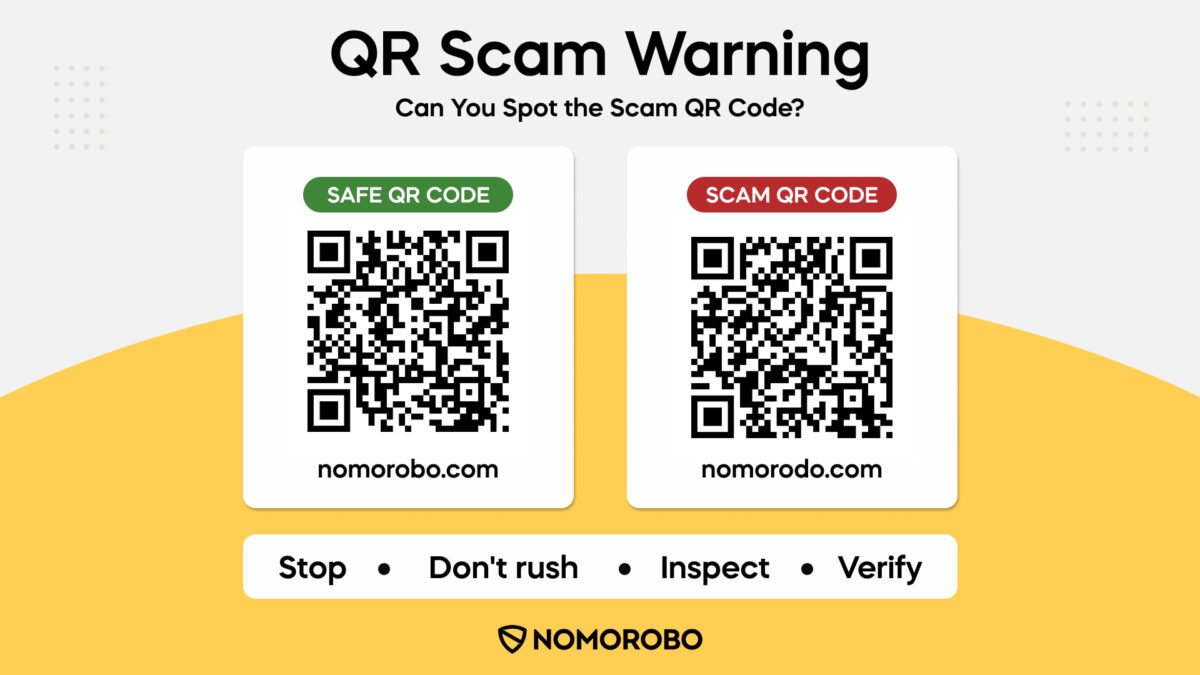
- Misspelled or unusual website addresses
- Domains that only look similar to the real company
- QR code stickers placed over another code
- Unexpected requests for payment
- Pressure to act immediately
- Downloads you were not expecting
If something seems off, do not continue.
Close the page and find another way to reach the organization or service.
Be Extra Careful With Donation Requests
Breaking news is particularly useful to scammers because it can create an immediate emotional response.
Before donating to a cause you saw in a message, social media post or QR code:
- Find the organization independently
- Visit its official website yourself
- Check exactly who will receive your donation
- Research the organization before paying
- Do not let urgency pressure you into skipping verification
If you think you are donating to one organization or cause, make sure that is where your money is actually going.
The Technology Changes. The Scam Playbook Doesn't.
Fake QR codes may feel different from suspicious robocalls or scam texts, but the psychological tricks are often the same.
Scammers want to:
Get your attention.
Trigger an emotional response.
Create urgency.
Get you to act before you verify.
Recognizing that pattern can help protect you regardless of whether the scam arrives through a QR code, text message, phone call or social media post.
If you receive a suspicious message and are unsure whether it could be a scam, try the Nomorobo Scam Detector.
Not sure if that message is real?
Slow Down Before You Scan, Click or Pay
Scammers benefit when you make decisions quickly.
You benefit when you take a few extra seconds.
Check the URL. Verify the organization. And when a breaking news story suddenly comes with a request for money, make sure you know exactly who is asking before you pay.
And when scammers try to reach you through unwanted calls and texts, get protected with Nomorobo and help stop scam calls and messages before they reach you.