
Nomorobo on 6abc: AI Tax Scam Calls Are Getting More Convincing
July 13, 2026
Nomorobo on NBC10 Boston: How to Get Fewer Robocalls
July 18, 2026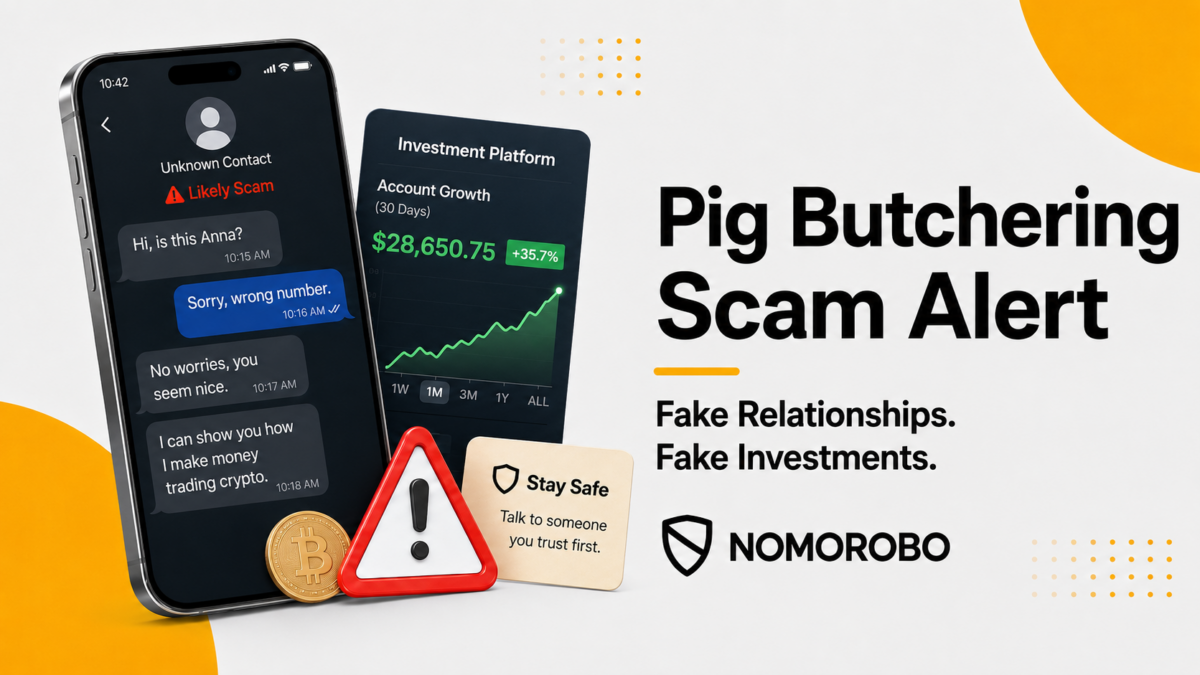
Pig Butchering Scam Alert
It may start with a harmless message like:
Hi, is this Anna?
And you may reply with something like:
“Sorry, wrong number.”
But at this point, a message similar to this one comes right back:
“No worries. You seem nice.”
That tiny exchange can be the opening move in one of today’s most damaging online scams: the pig butchering scam, also called a relationship investment scam or romance baiting.
Unlike quick robocalls or obvious phishing texts, this scam is slow. The scammer builds trust over days, weeks, or even months. Then, once the relationship feels real, they introduce an “investment opportunity” that is anything but real.
Regulators describe these scams as relationship based investment fraud, where strangers contact people online, build rapport, and eventually push them toward fake investments, often involving cryptocurrency.
What Is a Pig Butchering Scam?
A pig butchering scam is a long-con investment scam.
The name comes from the idea of “fattening up” a target with attention, trust, and emotional connection before the financial “slaughter.” It is an ugly name for an even uglier scam.
The scam usually combines:
- Romance scam tactics
- Fake friendship
- Crypto or investment fraud
- Catfishing
- Social engineering
- Fake websites or fake trading apps
The FBI describes cryptocurrency investment fraud, often called pig butchering, as a confidence-based scam where criminals build a relationship online before introducing a fraudulent cryptocurrency investment opportunity. Victims are then coached to invest more and more money into a platform that only appears profitable.
How the Scam Works
Pig butchering scams usually follow a pattern.
1. The unexpected message or call
The scammer may contact you through:
- A “wrong number” text
- A dating app
- Facebook, Instagram, WhatsApp, or Telegram
- A social media direct message
- A professional networking app
At first, they are not asking for money. That is what makes the scam feel different.
2. The trust building phase
The scammer keeps the conversation going. They may talk about daily life, family, work, travel, or personal struggles.
They may seem kind, successful, attractive, patient, and oddly available.
FINRA warns that these scammers often start with personal, non-investment topics and use fake but realistic-looking profiles to build rapport.
3. The “investment” opportunity
Once trust is established, the scammer casually mentions how they are making money.
Common hooks include:
- Crypto trading
- Foreign currency trading
- Precious metals
- “Guaranteed” returns
- Exclusive investment platforms
- A mentor, uncle, analyst, or insider strategy
The pitch is usually framed as help, not pressure.
“Try a small amount first.”
“I just want you to succeed.”
“I can show you exactly what I do.”
4. The fake profits
The victim is directed to a fake trading website or app. At first, the account may appear to make money.
That is part of the trap.
The fake profits are there to build confidence and encourage larger deposits. The FBI warns that victims may appear to be investing in an extremely profitable platform, only to find later that they cannot withdraw their funds.
5. The withdrawal problem
When the victim tries to take money out, the platform suddenly demands:
- Taxes
- Withdrawal fees
- Account upgrades
- Verification payments
- Penalty payments
- More deposits to “unlock” funds
That is the final squeeze.
The FDIC Office of Inspector General warns that victims may be asked to pay additional fees when trying to withdraw, or they may be locked out entirely as the scammer disappears with the money.
Why These Scams Are So Dangerous
Pig butchering scams do not just steal money. They steal trust.
Victims may believe they are talking to a romantic partner, a close friend, or someone who truly cares about them. That emotional bond makes the investment pitch feel personal.
The CFTC says these scams rely on dating apps, social media platforms, messaging apps, and even random wrong-number texts. Scammers use fake profiles, images, videos, and voices to appear trustworthy, attractive, and professional.
That is why “I would never fall for that” is not a plan.
These scams are designed to be patient, personal, and believable.
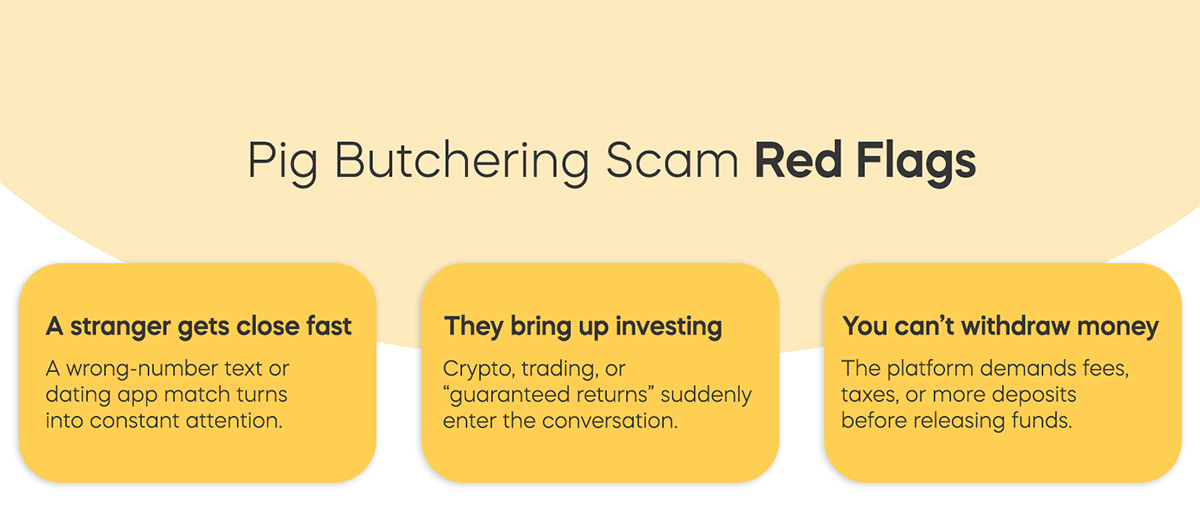
Red Flags of a Pig Butchering Scam
Watch for these warning signs:
- A stranger contacts you unexpectedly and keeps the conversation going
- They quickly become friendly, romantic, or emotionally intense
- They avoid meeting in person or making normal video calls
- They move the conversation to WhatsApp, Telegram, Signal, or another messaging app
- They talk about crypto, trading, or investment success
- They offer to “teach” you how to invest
- They push you toward a specific app, website, or trading platform
- They show screenshots of big profits
- They discourage you from talking to family, friends, or financial advisors
- You are asked to pay fees or taxes before withdrawing money
The FBI lists several similar warning signs, including an online contact pitching an investment opportunity, pressure to invest quickly, requests to limit contact with family or advisors, and difficulty withdrawing funds.
What To Do If Someone Online Mentions Investing
Slow down.
Before sending money, ask yourself:
- Have I met this person in real life?
- Did they contact me unexpectedly?
- Are they pushing a specific investment platform?
- Can I independently verify the company?
- Is the investment registered or regulated?
- Why do they care so much about where I put my money?
FINRA recommends being wary of unsolicited investment advice, especially from someone you have only spoken to online, and researching unfamiliar trading platforms before moving any money.
You can also use Nomorobo’s Spam Phone Number Lookup to check suspicious phone numbers connected to texts, calls, or voicemails.
What If You Already Sent Money?
First: do not send more.
Scammers may claim you need to pay one more fee, one more tax, or one more deposit to recover your funds. That is usually another trap.
Take these steps:
- Stop communicating with the scammer
- Do not pay withdrawal fees, taxes, or recovery charges
- Save screenshots, wallet addresses, phone numbers, messages, and transaction records
- Contact your bank or crypto exchange immediately
- Report the scam to the FBI’s IC3
- Report suspicious activity to the FTC at ReportFraud.ftc.gov
The FBI advises suspected victims to stop sending money, file a report with IC3 as soon as possible, avoid sharing more personal or financial information, and avoid recovery services that claim they can get the money back for a fee.
How Pig-Butchering Scams Work Behind the Scenes
For a deeper look at how pig-butchering scam operations work behind the scenes, watch this presentation from Jim Browning at the Global Anti-Scam Summit Asia 2025, published by the Global Anti-Scam Alliance.
The video explains how these scams are organized, how victims are manipulated over time, and why fake investment platforms can look so convincing. Learn more here: https://www.youtube.com/watch?v=ifYrDSEDl9c.
How Nomorobo Helps
Pig butchering scams often begin with a call, text, or “wrong number” message.
Nomorobo helps block unwanted calls, scam calls, and spam texts before they reach you. And with Fraud Fighters, you can learn the scripts, pressure tactics, and warning signs scammers use before they get a chance to work on you.
For added protection, Personal Information Protection can help reduce exposed personal data that scammers may use to make messages feel more believable.
A real relationship does not require you to invest in a mystery platform.
A real investment does not require secrecy, emotional pressure, or payment just to withdraw your own money.
If a stranger online becomes your friend, then your “investment coach,” pause.
Slow down. Talk to someone you trust. Verify everything.
Protect your phone from scam calls and texts. Get Nomorobo and explore more real-world scam examples on Fraud Fighters.