
Nomorobo Catches Scammers Live on Camera
April 22, 2026
Fake Purchase Scam Surge: The “Fixit LLC” Calls Behind a Growing Threat
April 29, 2026
Spam Texts Are Catching Up to Robocalls
Tax season already comes with enough paperwork, passwords, and mild existential dread. Now add scam calls and fake tax texts to the pile.
In a radio interview with Philadelphia WURD, Nomorobo's Managing Director, Matt Mizenko, warned that tax-related phone scams have surged fast. According to Nomorobo’s data, mentions of “IRS” or “Internal Revenue Service” were up 400% on phone calls in January compared with December, while texts mentioning those terms rose 50%.
Listen to the audio:
The tax scam wave is already here
Matt’s biggest point was simple: these scams are not theoretical. They are already hitting phones at full speed.
That matters because tax scams work especially well this time of year. People are expecting tax documents, thinking about refunds, and trying to stay on top of deadlines. A scammer only needs a message that sounds just believable enough to get someone talking.
Why these scams feel more convincing now
According to Matt, the bigger AI problem is not deepfake audio. It is how scammers use AI behind the scenes.
Bad actors can now tell AI to go find people in a certain age group, income level, or credit range, then pull together personal details from data breaches and other online sources. That gives them enough information to sound legitimate when they call or text.
So instead of a random stranger saying, “I’m from the IRS,” the scammer may already know your address, family names, or places you used to live. That is the trap. The more they seem to know, the easier it is to make you confirm the next piece of information yourself.
Seniors are not the only target, but they are a key one
The host raised an important point about older adults being especially exposed. Matt’s answer was useful for everyone: be deeply skeptical of anything that comes to your phone that you did not ask for.
That applies to calls. It applies to texts. And it definitely applies to anyone claiming to be from the government and asking you to “just confirm” a few details.
The safest move is still the simplest one
A lot of people already use a smart first rule: do not answer calls from numbers you do not know.
For people who cannot do that every time, Matt’s advice was to slow down and stay cautious. Do not assume a caller is real just because they know a few facts about you. In many cases, those details were scraped from data breaches or mined online.
If a message is unexpected, treat it that way.
What about those silent calls and voice recording fears?
Matt also addressed the concern about scam calls that connect, you say “hello,” and then hear nothing back.
He said Nomorobo does not see a large amount of that in its own system, in part because many customers use call-screening technology that keeps their real voice out of the first interaction. But he added an important tip: if a call connects and you hear a beep, bing, or another telltale recording sound, that is a strong sign to stop talking and hang up.
The good news is that a quick “hello” usually is not enough to recreate someone’s voice convincingly. Longer clips from social media videos are generally far more useful to scammers.
How Nomorobo is responding
Matt used the interview to walk through Nomorobo’s consumer tools.
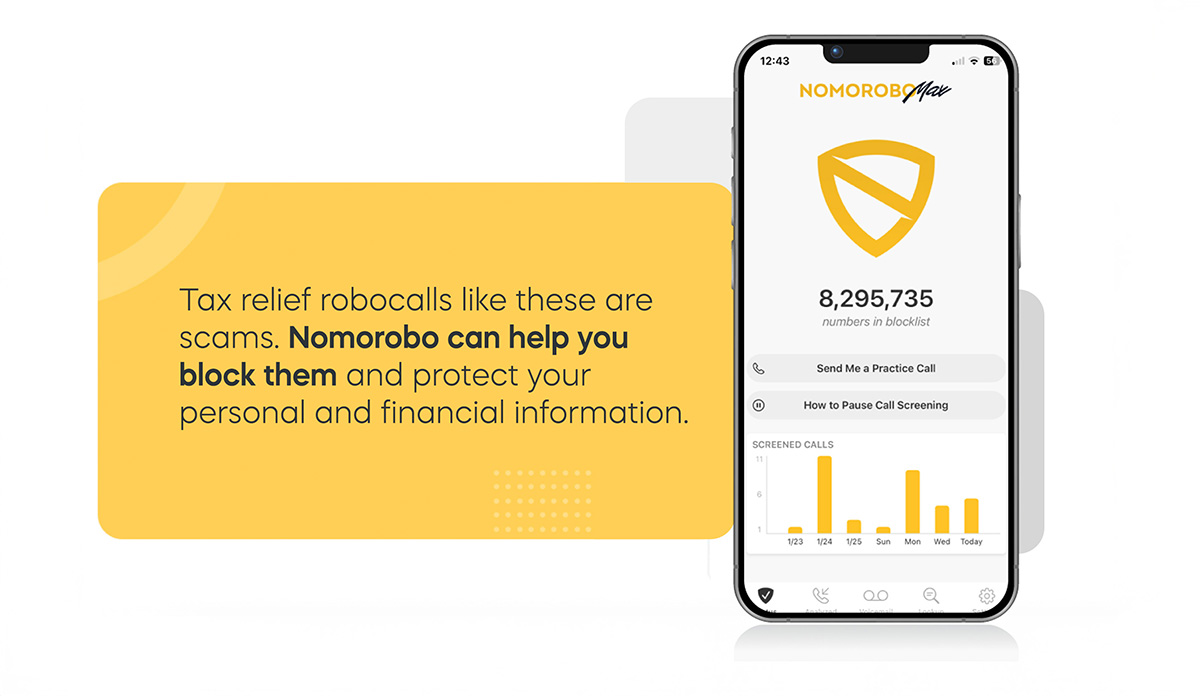
Its core phone protection products, including Nomorobo Max and the broader Nomorobo mobile app options , are built to keep numbers known to be bad from reaching your phone and to screen suspicious callers before they get through. Nomorobo also recently launched Spam Text Blocker , and its Fraud Fighters hub offers scam updates, audio examples, a heat map, and consumer guidance.
Matt also shared a useful real-world signal: in the new spam text tool, the top blocked terms users are already adding include “taxes” and “tax.” That tells you how quickly consumers are getting hammered by this season’s scam wave.
Why call screening still works
One detail from the interview stood out. Matt compared smart call screening to having a doorbell camera.
If a suspicious caller gets challenged and has to explain who they are and why they are calling, many bad actors simply move on. According to Matt, when Nomorobo Max asks callers to identify themselves, scam callers hang up 99 times out of 100.
That is the same principle as home security: make yourself a harder target, and the scammer goes looking for an easier one.
What consumers should do right now
There are a few practical takeaways from Matt’s interview:
- Be skeptical of unsolicited calls and texts
- Do not confirm personal details just because a caller already knows some facts about you
- If you hear a beep or recording tone on a strange call, stop talking and hang up
- Use call-blocking and text-filtering tools before scams reach you
- Check unfamiliar numbers with a phone number lookup tool when needed
For anything tax-related, verify through official channels like IRS.gov instead of trusting a caller or text. And if you think your information may already have been exposed, the IRS and FTC both offer official help for reporting scams and handling identity theft.
The bottom line
Scammers are not waiting for peak tax season. They are already here, and they are using better data, smarter scripts, and more targeted tactics than they were even a year or two ago.
That is exactly why Matt’s advice matters: stay skeptical, share less, and put protection in place before the next fake IRS text or call lands on your phone.
Tax season is stressful enough without a scammer trying to turn your phone into a phishing trap. Explore Nomorobo Max, try Spam Text Blocker, and keep up with the latest threats on Fraud Fighters.