
Tax Season Scams Are Flooding Phones
April 28, 2026
Social Security Scam Alert: The Fake $2,600 Benefits Call
April 29, 2026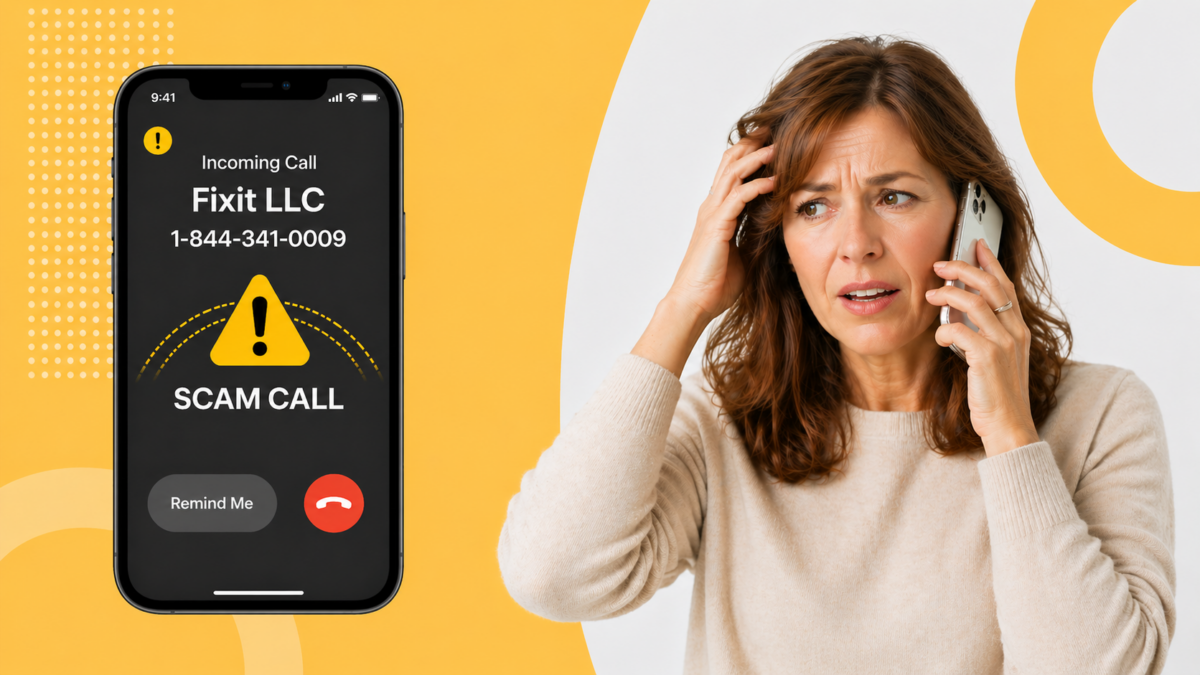
Fake Purchase Scam Surge: What We’re Seeing Right Now
Nomorobo is tracking a spike in scam calls built around a simple, but effective, hook.
A purchase you didn’t make.
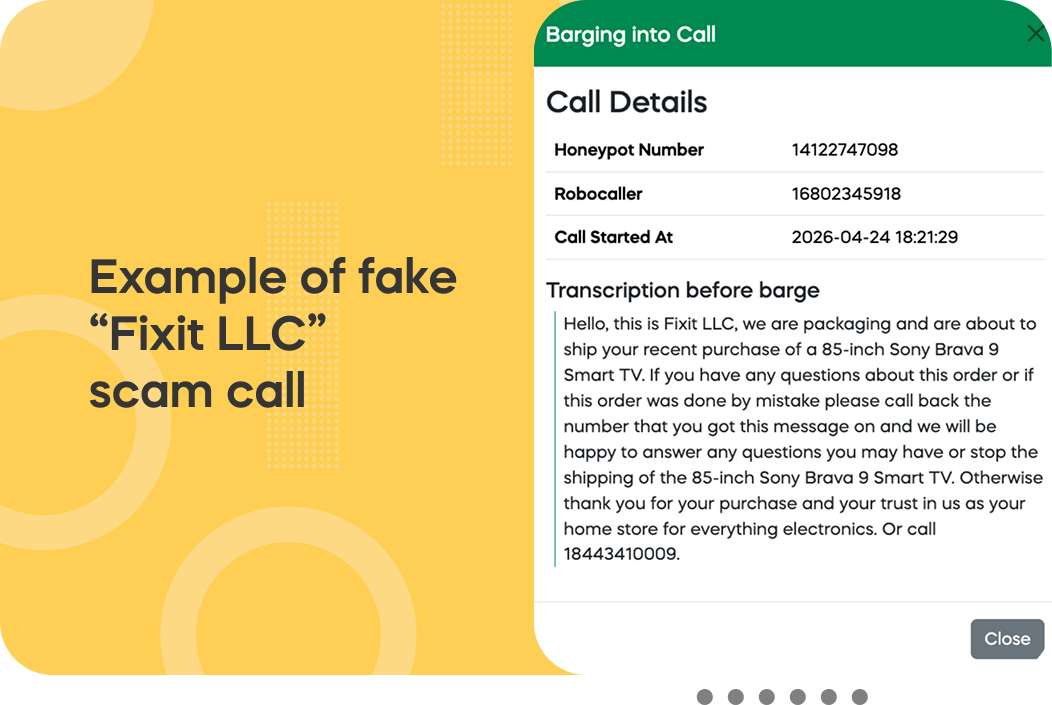
On April 24, 2026, our honeypot network detected a wave of robocalls from a company calling itself “Fixit LLC,” all using nearly identical scripts.
The message is straightforward:
“We are about to ship your recent purchase of an 85-inch Sony Bravia Smart TV…”
It sounds like a routine confirmation.
But it’s actually the first step in a coordinated fraud attempt.
Watch the video here:
A Familiar Script, Evolving Tactics
This scam isn’t new, but it’s evolving.
Fake purchase alerts have been around for years. What’s different now is how they’re being used as a gateway into more complex fraud schemes.
In this case, the robocall isn’t trying to steal your money directly.
It’s trying to get you to engage.
Once you do, the scam expands.
What Happens After You Call Back
According to Nomorobo, the callback leads to a multi-step scam operation:
- A scammer claims to be from Amazon and flags suspicious activity
- You’re transferred to a fake “bank fraud department”
- A second scammer escalates the situation
- You’re told your account is compromised
Then comes the ask.
Move your money. Now.
Specifically, into a cryptocurrency ATM.
Why This Scam Works
This campaign is effective because it layers multiple psychological triggers:
- Confusion - “Did I actually buy something?”
- Fear - “Is my account compromised?”
- Urgency - “I need to act immediately”
By the time victims realize what’s happening, they’re already deep into the interaction.
And that’s exactly where scammers want them.
The Role of Generic Branding
One notable detail in this campaign is the use of the name “Fixit LLC.”
It’s vague. It’s generic. And that’s intentional.
Because it makes it harder to quickly verify whether the call is legitimate, giving scammers more time to keep you engaged.
The Endgame: Cryptocurrency Fraud
This scam ultimately funnels victims toward one outcome:
Transferring money into cryptocurrency.
And once that happens, recovery is unlikely.
According to the FBI:
- Americans lost $389 million to crypto ATM scams in 2025
- More than 60% of those losses impacted older consumers
This isn’t just a robocall problem.
It’s a financial fraud pipeline.
What to Watch For
This campaign follows a clear pattern.
Be cautious if you receive a call that:
- References a purchase you don’t recognize
- Encourages you to call back or press a number
- Transfers you between multiple “departments”
- Creates urgency around your financial accounts
- Mentions cryptocurrency or urgent fund transfers
What This Means for Consumers
Scammers are no longer relying on a single interaction.
They’re building multi-step experiences designed to:
- Gain your trust
- Increase emotional pressure
- Guide you toward a high-risk action
The robocall is just the entry point.
How to Protect Yourself
The best defense is simple:
- Don’t engage with unexpected purchase calls
- Don’t call back unknown numbers
- Verify transactions directly through your accounts
- Never move money based on a phone call
And most importantly. If someone tells you to use a Bitcoin ATM, it’s a scam.
Learn more about frauds like that on our Fraud Fighters page.
How Nomorobo Helps
At Nomorobo, we track scam campaigns in real time using our honeypot network.
That allows us to:
- Detect emerging scam patterns
- Identify coordinated campaigns
- Block robocalls before they reach you
So instead of reacting to scams…
You can avoid them entirely.