
Government Shutdown Scams Spike in Philadelphia
March 14, 2026
Debt Relief Robocall Scam Alert
March 31, 2026
Robocalls Still America’s Top Consumer Complaint
A report from CBS News Miami takes a closer look at why robocalls remain the number one consumer complaint in the United States and what’s being done to stop them.
The segment features real examples of scam calls, along with insights into how robocallers operate and why enforcement remains difficult.
Watch the full report below.
The full television report, featuring insights from Nomorobo, is available to watch here:
👉 https://www.youtube.com/watch?v=sw9O0Wk7fuQ&t=3s
Robocalls Remain a Massive Problem
Whether promoting payday loans, questionable charities, or outright scams, robocalls continue to flood phones across the country.
For many consumers, the experience is constant and disruptive. One individual counted 13 spam calls in just a few days, highlighting how persistent the problem has become.
And despite long-standing efforts like the Do Not Call Registry, the issue has only grown.
Current scam trends and examples are available through the Nomorobo Fraud Fighters resource:
https://www.nomorobo.com/fraudfighters
The Numbers Keep Rising
According to recent data, the first nine months of 2025 saw:
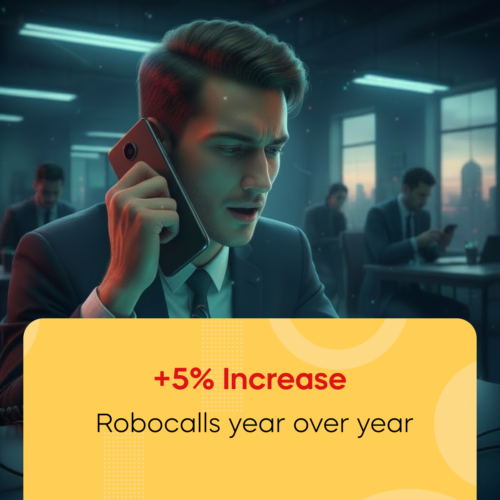
40.8 billion robocalls which is a 5% increase compared to the same period last year.
Many of these calls violate the Telephone Consumer Protection Act, which makes unsolicited automated or pre-recorded calls illegal.
Yet they continue.
Why Illegal Robocalls Persist
Experts say the main reason is simple: they’re hard to track down.
Scammers constantly evolve, using new technologies and tactics to avoid detection.
“They’re using all sorts of new technologies all the time. They’re very creative,” one expert explained in the report.
A New Approach: Fighting Back with Data
To combat the problem, companies like Nomorobo are taking a more aggressive approach.
Using a network of more than a quarter million unused phone lines, they track and record robocalls in real time, essentially creating a large-scale monitoring system to catch scammers in action.
With this data, they’ve taken legal action:
Four lawsuits have been filed against alleged robocallers, primarily targeting debt collectors.
The goal is to send a clear message:
“We’re watching. We know what you’re doing. We can prove what you’re doing.”
Gaps in Enforcement
A key challenge remains enforcement.
A recent analysis found that more than 50% of U.S. phone companies are not complying with federal robocall regulations, which require them to implement anti-robocall protections.
Experts say both regulators and companies share responsibility in addressing the issue.
Until stronger enforcement is in place, robocalls are likely to continue.
According to recent data, the first nine months of 2025 saw:
40.8 billion robocalls which is a 5% increase compared to the same period last year.
Many of these calls violate the Telephone Consumer Protection Act, which makes unsolicited automated or pre-recorded calls illegal.
Why It’s Not Going Away
As long as robocallers can operate without consequences, the problem will persist.
“If they can get away with it, why not?” one consumer noted in the report.
Without stronger enforcement and continued innovation in blocking technology, robocalls will remain a daily frustration for millions of Americans.