
The Bitcoin ATM Hacker Scam: Don’t Move Your Money
November 13, 2025
Fraud Awareness Week: Scams Are Surging in Georgia
November 27, 2025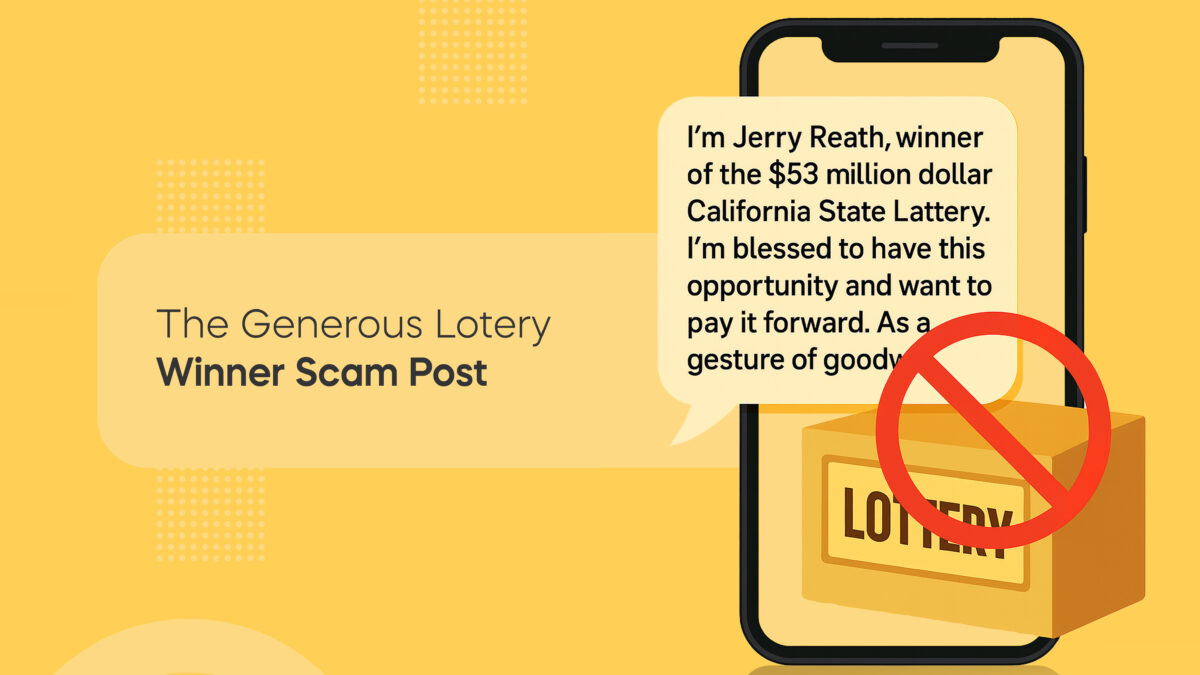
Watch and Learn
We’ve put together an in-depth video breaking down this exact scam so you can hear it, see how it works, and know how to respond.
If you prefer learning in video format, head over to our Fraud Fighters page. It’s packed with real-world scam examples and expert tips to help you stay one step ahead of the bad guys.
A text pops up on your phone claiming a lottery winner has chosen you to receive a life-changing gift — a million dollars, no strings attached. It sounds like a dream… but it’s one of the oldest and most effective scams still circulating today.
In this latest edition of Behind the Scams, we break down how these “generous winner” messages work and why they’re designed to empty your wallet, not fill it.
How the Generous Lottery Winner Scam Works
The scam always begins with a heartwarming story:
“I’m Jerry Reath, winner of the $53 million California State Lottery.
I’m donating $1 million to six lucky people — and you’re one of them.”
Scammers count on the emotional pull of sudden good fortune. Once you respond, the “winner” will explain that before you receive your millions, you must pay:
-
a processing fee
-
a tax payment
-
a transfer charge
-
or similar “administrative costs”
In reality, it’s all an advance-fee scam. You pay the fee… and that’s the last time you ever hear from them.
Why this Scam Is Dangerous
These scams aren’t just annoying — they’re engineered to manipulate emotions and exploit trust.
-
They sound uplifting. A stranger choosing you out of kindness is a powerful hook.
-
They use urgency. “You must respond quickly or lose your chance.”
-
They request money quietly. Fees are framed as “routine” or “required.”
-
They ghost you once paid. Victims rarely recover the money.
No real lottery winner — or anyone else — needs you to pay to receive a gift. That’s the biggest red flag of all.
How to Protect Yourself
-
Scammers rely on emotional reactions. Slow down, stay skeptical, and use these steps to protect yourself:
-
Never send money to claim a prize. Real lotteries never ask winners to pay upfront fees.
-
Don’t respond to unsolicited “winner” messages. Whether by text, email, or social media — delete and block.
-
Look for inconsistencies. Bad grammar, unfamiliar phone numbers, and vague information are all red flags.
-
Report the scam. File with the FTC at reportfraud.ftc.gov or contact your state’s consumer protection office.
If someone truly wanted to give away millions, they wouldn’t do it by texting strangers.
-
Fraud Fighter Pro Tip
If you receive a message like this, it’s nothing more than an advance-fee scheme. Scammers will ask you to pay taxes or administrative fees before releasing your “winnings.”
Once you send the money, they disappear.
Take Action
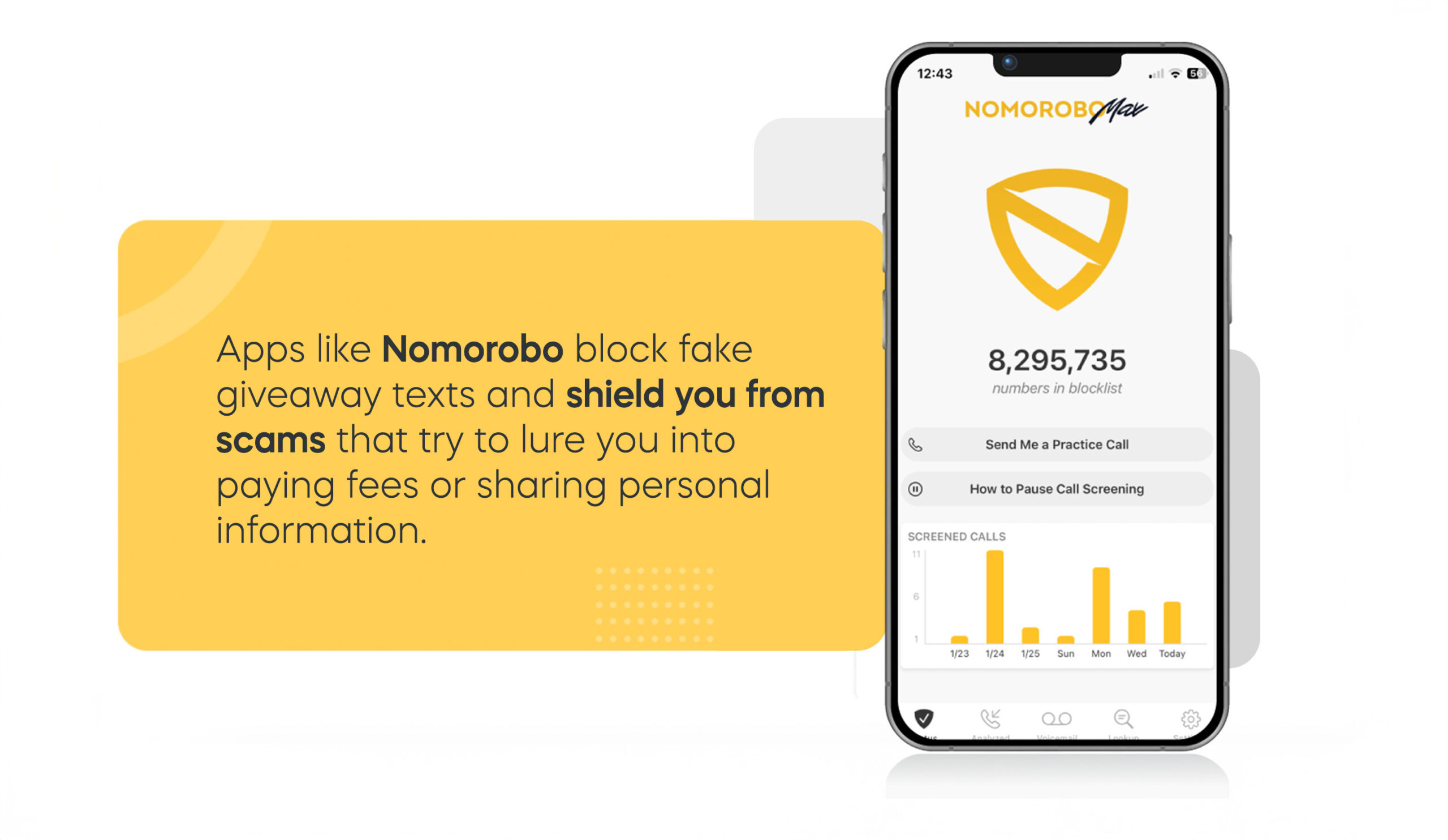
Every scam starts with a single message — but with Nomorobo, that message never makes it to you.
Our award-winning call screening blocks the shady texts and robocalls that fuel schemes like the Generous Lottery Winner scam.
Take control of your phone, reduce the noise, and stay ahead of fraudsters.
Start using Nomorobo today to protect your identity and keep your personal information safe.