
Fraud Awareness Week: Scams Are Surging in Georgia
November 27, 2025
The Verizon Fraud Prevention Impostor Scam: When Every “Helper” Is Actually a Scammer
December 4, 2025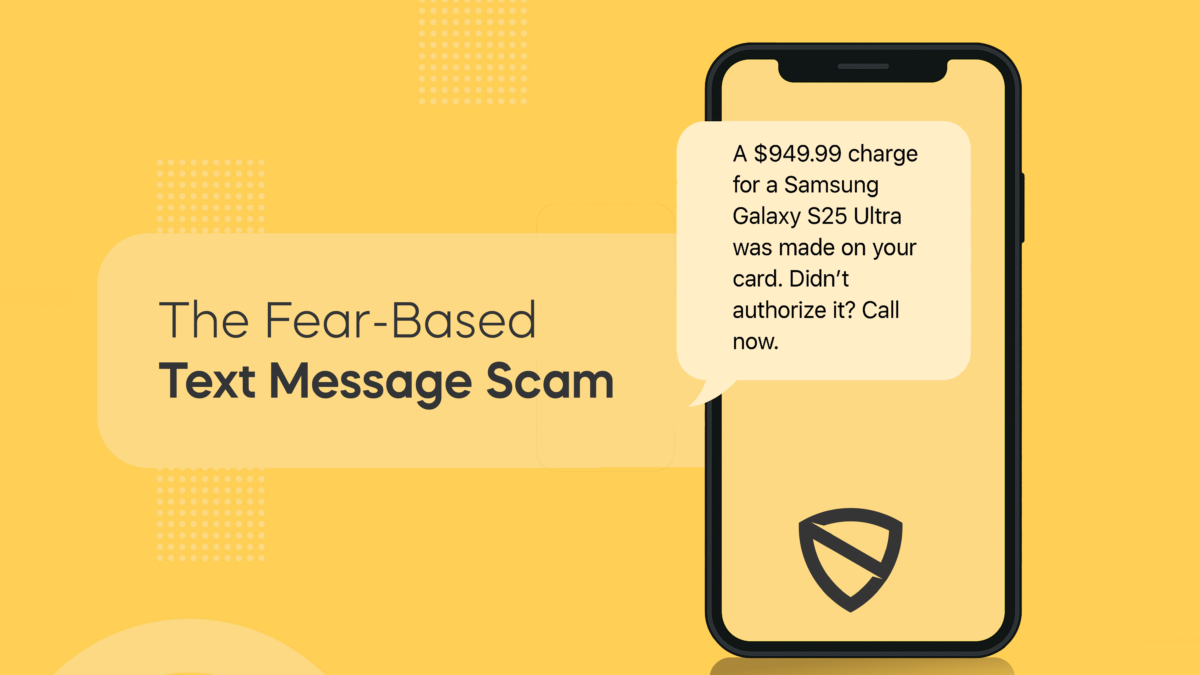
Scammers Are Using Fear to Steal Your Money
You’ve seen them before.
That “ding” on your phone. Then a message pops up, warning you that something is wrong:
“A transaction of $176.59 was attempted through your Apple account. If you did not authorize this, call support now.”
“Your NORTON Antivirus Subscription for $443.02 has been approved. Call to cancel.”
“Your order for a Samsung Galaxy S25 worth $899.99 has been processed. If this wasn’t you, call immediately.”
These are scam text messages, and they’re designed to do one thing: scare you into acting fast.
If you call the number or click the link, you’re not talking to Apple, Norton, or your bank, you’re talking to a scammer.
Their goal? To make you believe your money or account is at risk, so you’ll hand over personal or financial information they can actually use to steal from you.
Scare Tactics Work and Scammers Know It
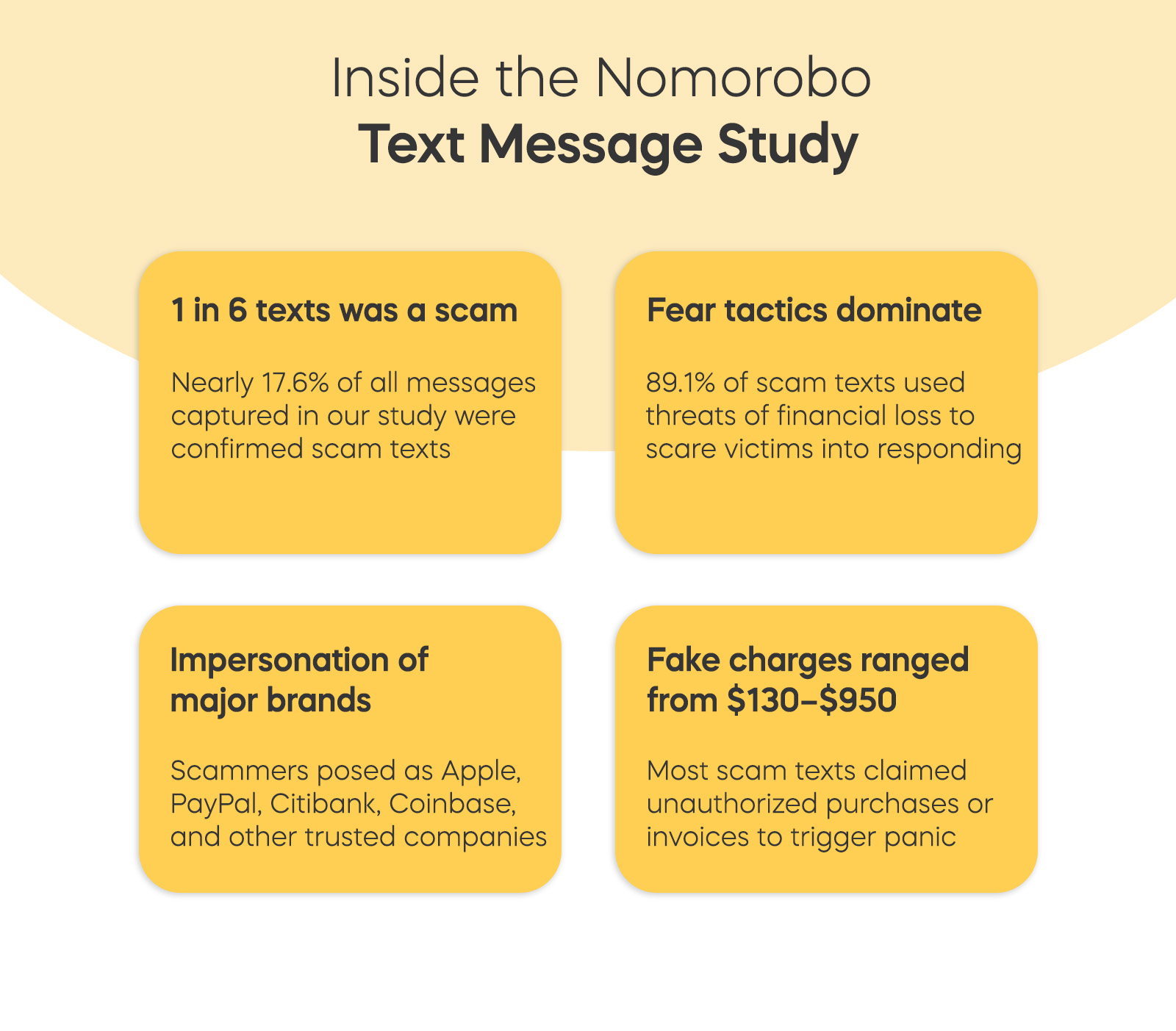
A new Nomorobo study found that 89% of scam text messages use threats of financial loss to manipulate victims.
By comparison, only 11% promise rewards like lottery winnings or free grants.
That’s a dramatic shift from previous patterns in robocalls. A 2023 Nomorobo study (“Dangerous Dialers”) found that just 28% of scam robocalls used threats — meaning text scammers rely on fear three times more often than phone scammers.
Why? Because it works.
Humans are hard-wired to respond to danger faster than opportunity. When we think something bad might happen—like losing money—we act quickly, often before we think.
As psychologist Roy Baumeister once explained:
“It is evolutionarily adaptive for bad to be stronger than good... Survival requires urgent attention to possible bad outcomes.”
Scammers know this instinct well—and they use it against us.
Inside the Nomorobo Text Message Study
Using our Honeypot Digital Monitoring System a network of 300,000 phone lines capturing real-world spam and scam traffic, Nomorobo’s research team analyzed 45,000 text messages received between August and October 2025.
Here’s what we found:
-
17.6% of all text messages were scams.
-
89.1% of those scams threatened financial loss.
-
Scammers impersonated trusted brands like Apple, PayPal, Citibank, and Coinbase.
-
The average fake “charge” or “invoice” ranged from $130 to $950.
This means nearly one in six texts sent to consumers during that time was a scam and nearly all of them used fear as their main hook.
Common Scam Texts That Use Fear Tactics
| Example Text Message | Threat Type |
|---|---|
| “A $949.99 charge for a Samsung Galaxy S25 Ultra was made on your card. Didn’t authorize it? Call now.” | Unauthorized purchase |
| “Your NORTON Antivirus Subscription for $443.02 has been approved. Call to cancel.” | Fake billing |
| “Coinbase: Login detected from Moscow, Russia. If this wasn’t you, call immediately.” | Account compromise |
| “Citibank Alert: Order placed on your card. If not you, call us immediately.” | Stolen card |
| “Apple Support: A transaction was attempted through your account. Call support now.” | Identity theft threat |
How to Protect Yourself
If a text message threatens you with financial loss, don’t respond.
Here’s what to do instead:
-
Don’t click links or call the number.
They’ll lead to fake customer service lines or phishing websites. -
Delete the message.
Never reply—even “STOP”—since it confirms your number is active. -
Check the source directly.
Log in to your official account (bank, retailer, etc.) or call the number on their verified website. -
Report the message.
Forward suspicious texts to 7726 (SPAM) or submit them to the FTC at reportfraud.ftc.gov. -
Stay informed.
Visit nomorobo.com/fraudfighters to listen to real scam recordings and learn how to recognize these tactics.
If a Text Makes a Threat - It’s a Bad Bet
Nomorobo’s early research shows that nearly all scam texts now rely on fear as their main persuasion tool.
That’s why it’s more important than ever to slow down before you react.
If a message threatens a charge, account lock, or penalty, assume it’s a scam.
Delete it. Report it. Protect yourself and your wallet before it’s too late.
Final Thoughts
Scammers will always evolve, but so will we. Nomorobo continues to monitor millions of real-world robocalls and scam texts every day through our Honeypot system, ensuring new threats are caught, flagged, and stopped before they reach your phone.
Join millions of consumers already protected by Nomorobo Max, the award-winning app that blocks scam calls and texts in real time.
Take control of your phone, reduce the noise, and stay ahead of fraudsters.
Start using Nomorobo today to protect your identity and keep your personal information safe.